

- The Top T-Shirt Customization Services for Brands, Teams & Online Stores - March 5, 2026
- Fuego Dance Shoes Review - October 16, 2025
Custom T-shirts are great in theory: You just upload a logo, pick a color, and click “order.”
But if you’ve ever tried to print shirts for a brand launch, a fundraising campaign, a school event, or an e-commerce store, you know that the reality is more complicated.
Minimum order requirements change the math. Print methods affect cost and durability. Some platforms are built for speed, others for scale, and others for creators who never want to touch inventory.
If you’re choosing the wrong platform, you’ll feel it — whether that’s in your margins, your delivery timelines, or the quality of the finished product.
So, which T-shirt customization service do you go for?
At a Glance
| Service | Best For | Minimum Order | Print Methods | Turnaround |
| BlueCotton | Bulk orders with brand-level quality | 6 | Screen, digital, and embroidery | Standard and rush options |
| Custom Ink | Schools and large group orders | No minimum (pricing favors bulk) | Screen, digital, and embroidery | Standard and rush |
| Printful | E-commerce print on demand | No minimum | DTG and embroidery | 2–7 days production |
| RushOrderTees | Fast turnaround bulk orders | No minimum | Screen, digital, and embroidery | As fast as 24 hours |
| UberPrints | DIY small to mid-size orders | 1 (digital), 12 (screen) | Screen and digital | 1–7 days |
| Spreadshirt | Bulk and creator hybrid | 6+ for discounts | Screen, flex, digital, and embroidery | 5–10 business days |
| Bonfire | Fundraising and creator drops | No minimum | Digital and screen | 7–14 days |
| VistaPrint | Small business marketing bundles | No minimum | Digital and embroidery | Standard shipping |
The best T-shirt customization services are reliable above all else. That means consistent print quality, transparent pricing, realistic turnaround times, and supporting different use cases without compromising the final product.
Ultimately, the right choice depends on what you’re printing, how many you need, and whether this is a one-time order or something you plan to scale.
1. BlueCotton: Best for Bulk Orders That Need to Feel Premium
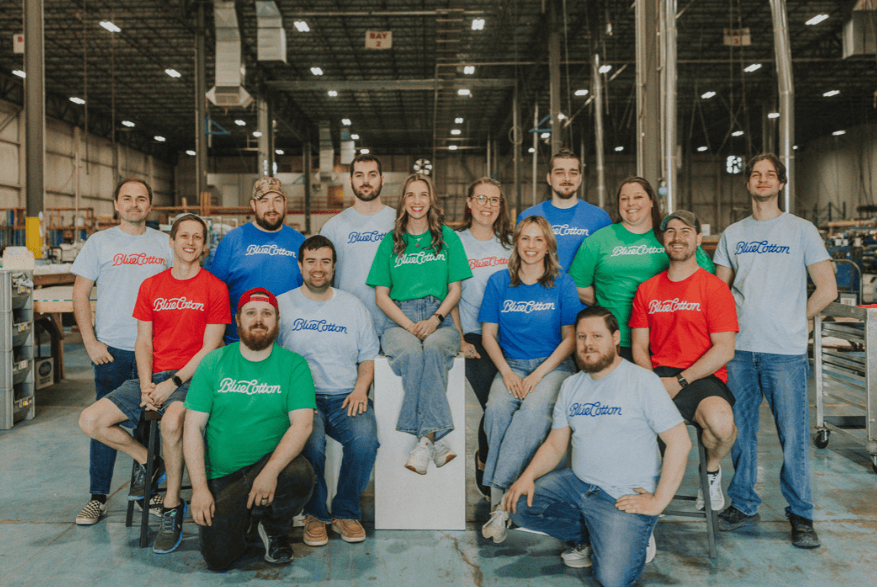
BlueCotton is a custom printer that specializes in bulk orders that receive the level of care that typically goes into single-shirt productions. They stand out for how reliably they deliver, with a process that feels more deliberate and less automated.
Where this really shows up is with reorders. Because they handle production in-house rather than outsourcing it across different facilities, there’s more control over the process, which helps reduce variability from one run to the next.
And if something looks off in your proof, you can talk to an actual person who understands printing (and is located in the same building as the actual printers). That extra layer of oversight can save you from expensive mistakes before production starts.
Strengths:
- High-quality screen printing for bulk runs
- Curated product catalog focused on fit and durability
- Strong reorder consistency
- Real human support during production
Considerations:
- Not built for automated e-commerce fulfillment
- Not ideal for one-off, single-shirt drops
2. Custom Ink: Best for Schools, Teams & Corporate Groups
Custom Ink is one of the most recognizable names in custom apparel. If you’ve ever ordered shirts for a school fundraiser, sports team, or corporate retreat, there’s a good chance they were involved.
The platform is approachable and polished, their design studio is beginner-friendly, and they’re comfortable handling large group orders. But where Custom Ink really shines is coordination — they make it easy to collect sizes, manage group payments, and simplify logistics.
Strengths:
- Extremely user-friendly
- Trusted national brand
- Handles large group coordination well
- Strong support for events and schools
Considerations:
- Pricing can climb quickly at mid-level quantities
- Less specialized than production-focused printers
3. Printful: Best for E-commerce Print-on-Demand
Printful doesn’t just print shirts; they provide the infrastructure to sell them. If you’re running a Shopify, WooCommerce, Etsy, or Squarespace store and want to sell shirts without touching inventory, Printful offers one of the strongest integrations available.
It’s built for scalability without risk. You upload your design, connect your store, and orders are fulfilled automatically — ideal for creators and startups testing new concepts.
Strengths:
- Seamless e-commerce integrations
- No minimum orders
- Automatic fulfillment
- Global shipping
Considerations:
- Lower margins compared to bulk printing
- Less control over the final production feel
- Higher per-unit cost than bulk printers
4. RushOrderTees: Best for Speed
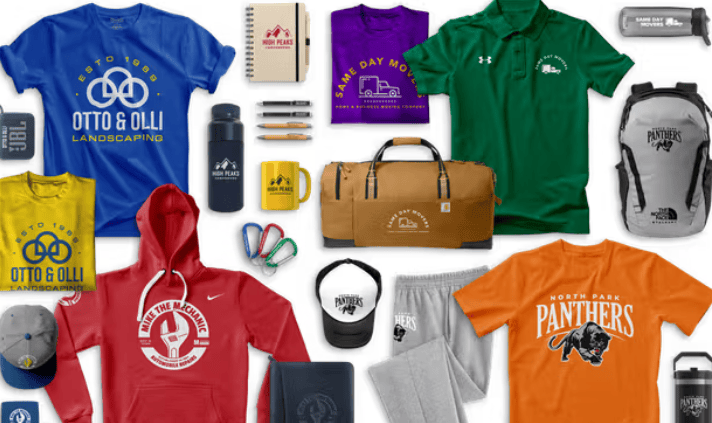
True to its name, RushOrderTees built its brand around urgency. If you need shirts fast, whether for a last-minute event, marketing activation, or team trip, this platform is designed for exactly that. They even offer rush production that can turn around orders in as little as 24 hours.
The platform supports screen printing and digital printing, but note that rush production often limits fabric options and increases costs. If you’re optimizing for long-term brand quality or large-scale reorders, it may make sense to compare pricing and production depth with more bulk-focused printers.
But when time is the deciding factor, RushOrderTees is one of the most reliable options in the category.
Strengths:
- Extremely fast turnaround options
- Wide product selection
- Reliable bulk production
- Clear pricing
Considerations:
- Rush pricing can increase costs significantly
- Less curated feel compared to premium-focused printers
5. UberPrints: Best for DIY Design Flexibility
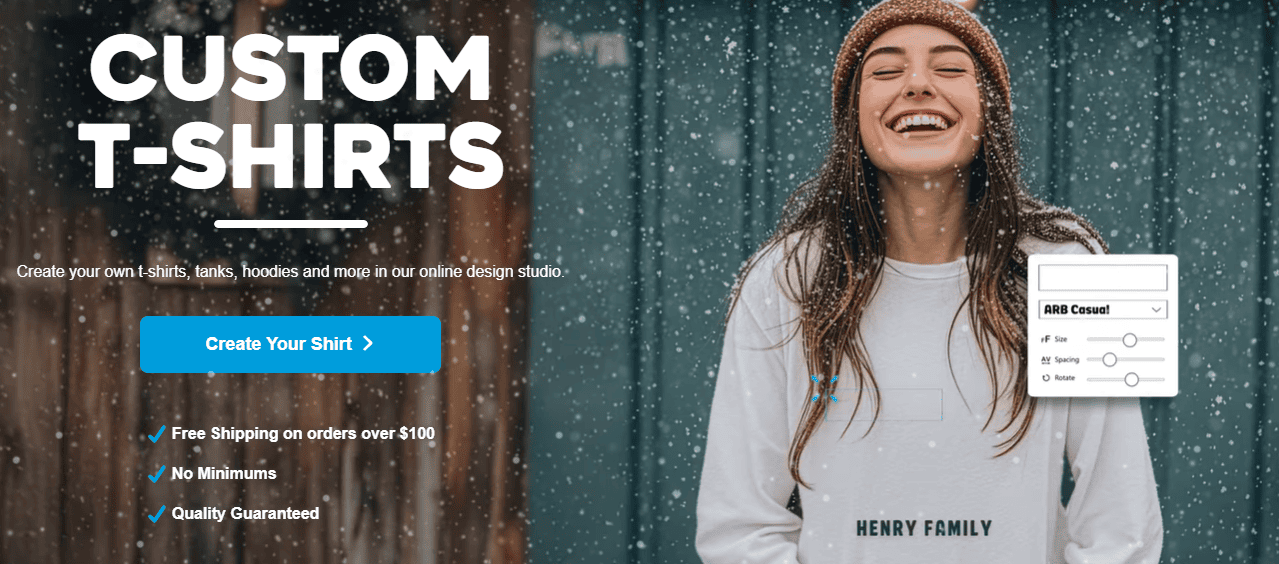
UberPrints is ideal if you want creative control and fast ordering without needing strategic guidance. Focusing heavily on its online design studio, they make it easy to upload artwork, manipulate text, experiment with color schemes, and preview layouts in real time. Their screen printing service has a 12-piece minimum, whereas their digital printing has no minimum, giving flexibility for smaller orders.
But where UberPrints stands out most is in ease of use. The ordering process is straightforward, pricing updates in real time, and turnaround for digitally printed orders can be quick.
However, the tradeoff here is that the experience is largely self-serve; if you’re looking for consultative help on fabric selection, brand positioning, or long-term production planning, you may want a more hands-on printer.
Strengths:
- Excellent online design tools
- No minimum for digital printing
- Competitive pricing for small orders
- Good for casual group use
Considerations:
- Less consultative support; more DIY-driven
- Bulk pricing not as competitive as production-focused printers
6. Spreadshirt: Best for Hybrid Bulk & Creator Orders
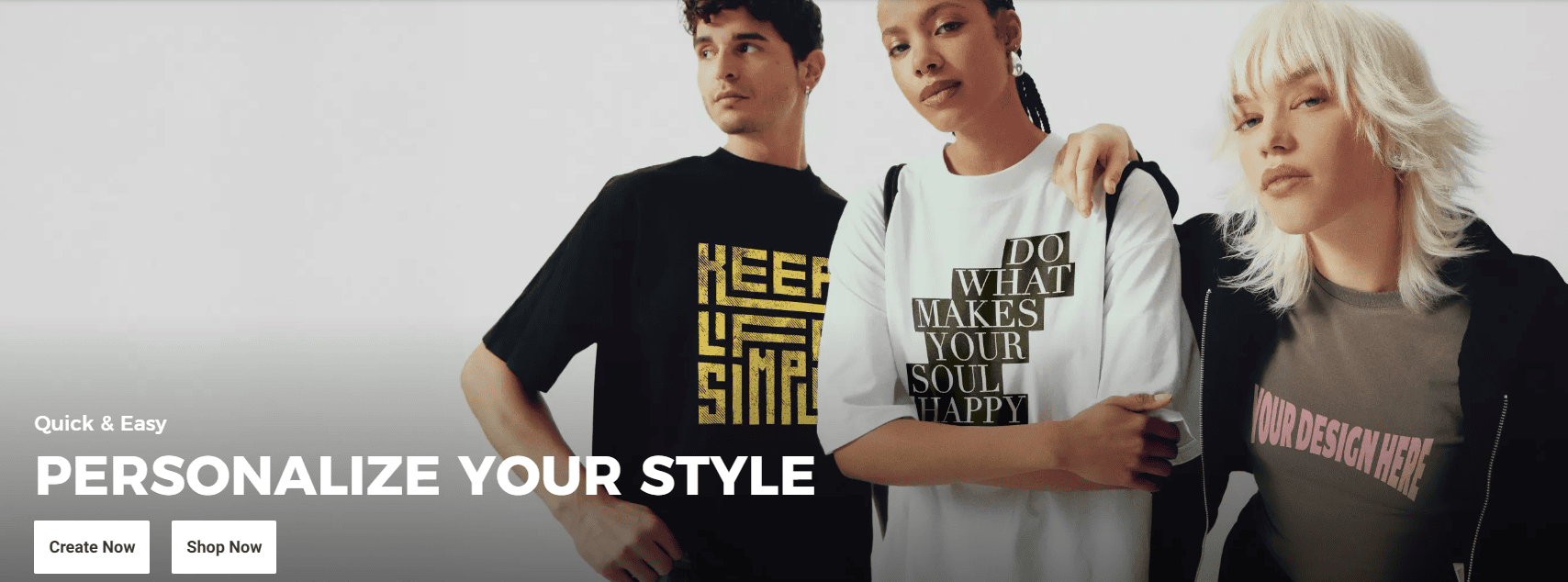
Spreadshirt supports bulk customization while also offering marketplace and creator options. They offer a wide variety of print methods, from screen, digital direct, flex, flock, and embroidery, making it appealing for customers who want more decoration options beyond traditional screen printing.
Their volume discounts start at relatively low quantities, which helps mid-sized orders. At the same time, their pricing structure can feel layered, especially when factoring in print areas and design fees. Spreadshirt is a solid middle-ground option for businesses or creators who want variety and international shipping, but they may not feel as specialized as production-focused printers when it comes to large-scale brand runs.
Strengths:
- Broad product catalog
- Multiple decoration methods
- Volume discounts
- Strong global presence
Considerations:
- Pricing structure can be complex
- Not as specialized for high-volume brand production
- Less personal support compared to smaller print shops
7. Bonfire: Best for Fundraising & Limited Drops
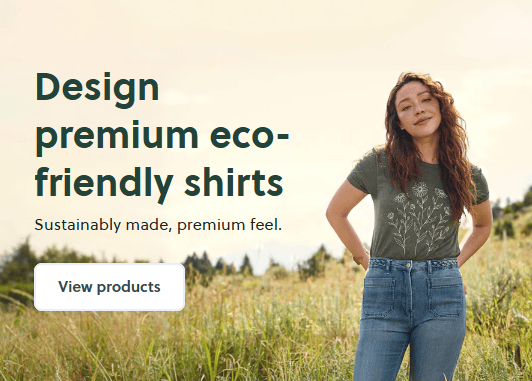
Bonfire started as a fundraising platform, and they still excel in that space. Their model is campaign-based: you launch a limited edition design and collect orders, and Bonfire handles printing and fulfillment. No inventory required.
This makes it appealing for nonprofits, creators, and social causes. And because orders are typically printed after the campaign closes, production timelines can be longer than traditional bulk printers.
The upside is reduced risk since you only print what’s sold. The tradeoff is less flexibility if you need immediate inventory or consistent reorders.
Strengths:
- No upfront costs
- Built-in fundraising tools
- No minimums
- Campaign-based structure
Considerations:
- Longer delivery timelines
- Less suitable for traditional bulk corporate orders
- Lower margin control
8. VistaPrint: Best for Small-Business Branding Bundles
VistaPrint is known primarily for business cards and marketing materials, but they also offer custom apparel. For small businesses looking to order shirts alongside banners, flyers, stickers, and signage, they provide convenience through a unified ecosystem. Their design tools are beginner-friendly, and it’s easy to maintain consistent branding across multiple products.
However, their print method options and fabric variety are more limited compared to dedicated apparel printers. So they tend to work well when shirts are part of a broader marketing order, but they may not be ideal for large-scale or brand-focused production runs.
Strengths:
- One-stop shop for marketing materials
- Beginner-friendly tools
- Consistent branding across products
Considerations:
- Apparel as an option, not the core service
- Limited print methods
- Not ideal for large-scale orders
How to Choose the Right Platform for Your Use Case
- If you’re ordering 100+ shirts and care about fabric feel, print quality, and reorder consistency, BlueCotton tends to deliver stronger long-term results.
- If you’re launching an e-commerce store and don’t want inventory, Printful is built for automation and store integrations.
- If you’re running a fundraiser or limited merch drop, Bonfire simplifies the campaign model.
- If you need shirts fast, RushOrderTees and BlueCotton are built around speed, while UberPrints works well for smaller digital orders with quick turnaround.
- For schools, teams, or corporate groups that need structured ordering and coordination, BlueCotton and Custom Ink are reliable choices.
- If you want flexibility across print methods with global reach, Spreadshirt offers multiple decoration options.
- If the desired shirts are part of a larger marketing effort, VistaPrint provides convenience within one branding ecosystem.
Mistakes to Avoid When Ordering Custom T-Shirts
Most frustrations in custom apparel aren’t caused by bad printers; they’re caused by preventable decisions made early in the process.
Here are the most common mistakes I’ve seen that brands, teams, and creators make.
- Choosing Based Only on Price per Shirt: The lowest per-unit price can be misleading. Fabric quality, ink durability, and print alignment affect how the shirt feels after five washes. Saving $1 or $5 per shirt doesn’t help if the result looks faded or cheap.
- Ignoring Fabric Weight and Fit: A 4-oz lightweight tee feels very different from a 6-oz retail-style shirt. Always check fabric specs and sizing charts before ordering large quantities.
- Underestimating Turnaround Time: Bulk screen printing takes time, and even digital printing requires certain production windows. If you’re ordering for an event, leave buffer days. Rush production exists, but it often costs more and will limit your options.
- Not Reviewing Proofs Carefully: Many platforms provide digital proofs before printing. Take advantage of these; small alignment shifts, color differences, or sizing adjustments are easier to fix before production starts than after 200 shirts are printed.
- Not Thinking About Reorders: If there’s even a small chance you’ll reorder, you should be planning for consistency in advance. Some platforms will rotate their suppliers or shirt blanks before your next order, which can change feel and fit over time. Production-focused printers with curated catalogs tend to offer more stability.
The Right Tee Starts with the Right Partner
The difference between “a shirt with a logo” and “a shirt that represents your brand” is rarely visible on the checkout page. It shows up in fabric weight, ink durability, alignment, customer support, and consistency across orders.
In my opinion, BlueCotton strikes the strongest balance between pricing, print quality, catalog curation, and hands-on support.
Because in the end, the best T-shirt customization service isn’t the one with the flashiest dashboard… it’s the one that makes you confident about reordering.