

- Zilker Belts Review: Is a Handmade Belt Worth the Price? - September 18, 2026
- Best Bras For Bell-Shaped Breasts: How To Fix Gaping At The Top - September 9, 2026
- The Best Ariat Alternatives For Premium Cowboy Boots - August 27, 2026
Tecovas makes genuinely good cowboy boots at a price that is hard to argue with. After months of wearing the Annie in Sequoia Cowhide, and after spending time in the Maggie before that, that is still where I land. There is plenty of chatter right now suggesting the brand has lost its way. Some of that criticism is worth taking seriously… some of it overstates the case.
I have been wearing Western boots since I was old enough to muck stalls. Justin Boots, when I was young and in a hurry, Ariats through years of polo barn work in Michigan, where traction mattered more than leather character, and a pair of Lucchese boots that I still have because once you own a boot built at that level, you understand what you are paying for. I have worn Tecovas boots enough to have a clear opinion, including the Annie in Sequoia Cowhide, which I reviewed separately and keep in regular rotation. I am not here to defend a brand uncritically or pile on because critical content is getting clicks. I am here to tell you what I actually think, including the parts that are legitimately complicated.
What I Tested
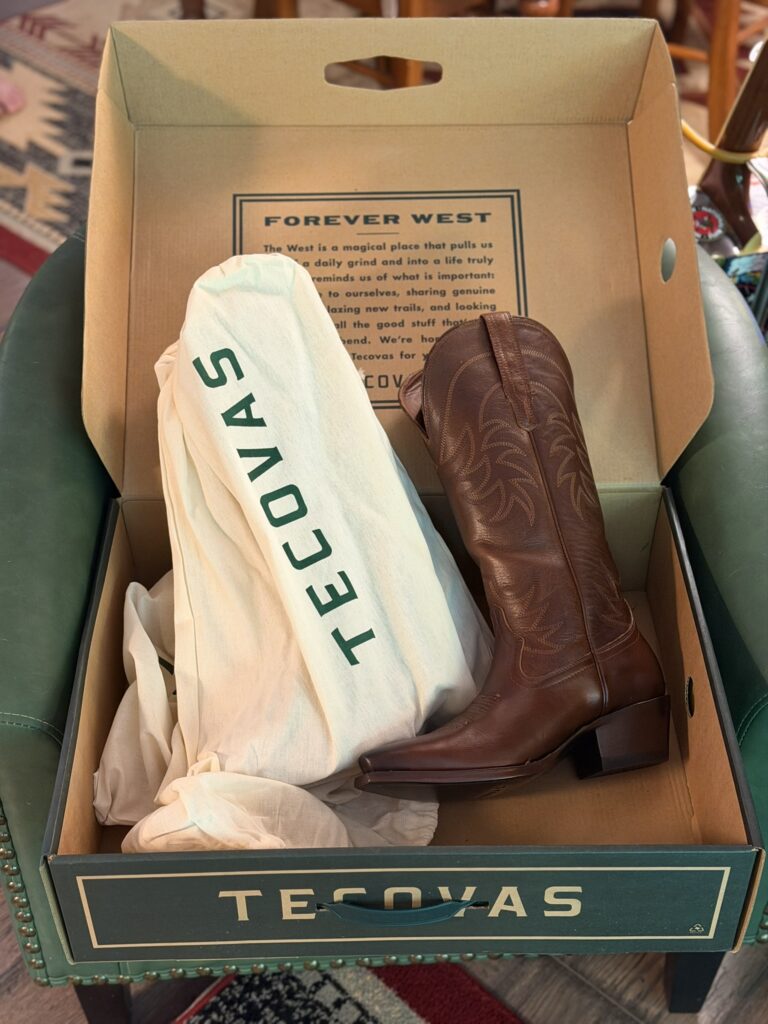
For this review, I tested the Annie in Sequoia Cowhide and the Maggie. I wore both in regular rotation over several months, including barn work, errands, and everyday wear. Construction specs and competitor comparisons draw on years of wearing boots across the market and on publicly available product documentation.
Bottom Line
Tecovas is still worth it for most buyers who want a genuine leather Western boot with traditional construction, strong out-of-the-box comfort, and a price that still feels accessible. Compared with Ariat, Tecovas feels more traditional and leather-forward; compared with Lucchese, it gives buyers a meaningful taste of premium Western craftsmanship without requiring a premium-boot budget.
Are Tecovas Boots Good Quality?
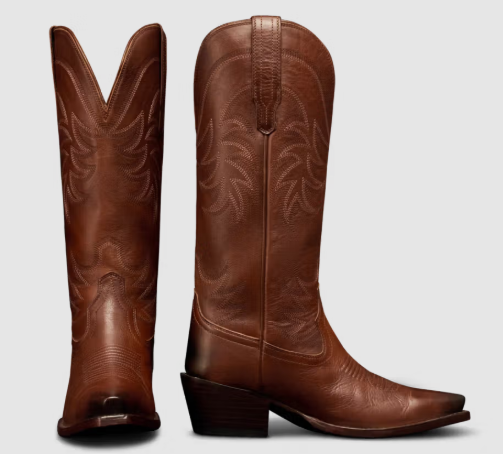
Start with the construction, because that is where most of the skepticism lives.
The core heritage boots are made in León, Mexico, by generational bootmakers using traditional techniques. León is not a shortcut. It is one of the major bootmaking and leatherwork centers in North America, and that shows up in the way Tecovas builds its heritage boots. The 200-plus-step handcrafting process is backed by details you can actually point to: Goodyear welt construction, resoleable leather soles, lemonwood pegs, stacked leather heels, and cork footbeds. Those are the kinds of construction choices that usually show up on boots with a much higher price tag.
I have worn two Tecovas styles long enough to have a real opinion on the construction. The Annie and the Maggie are built differently in terms of toe shape and profile, but the quality of what is happening underneath is consistent between them.
The Maggie has a broader square toe and a slightly more casual feel, which is useful if you want something that works on uneven ground without looking like a dedicated work boot. The Annie reads more polished, with a snip toe that works across a wider range of outfits.
What stood out to me after wearing both is that they feel like they came from the same standard of construction. The interiors are smooth, the footbeds feel supportive without being bulky, and both boots have held their shape after months of regular wear. That consistency matters more to me than any single construction detail.
The leather surprised me. I expected it to look good at this price, but I did not expect it to feel as substantial as it does. The hides have weight, grain, and real character. They develop a patina and respond to conditioning in the way you want a leather boot to, which is not something you can say about everything in this price range.
Something worth mentioning for anyone buying online: if you have ever walked into a real boot store or tack shop, you know that leather smell. It is part of the whole experience. The two reasons to try boots in person are sizing and the chance to pick them up, handle the leather, and get a feel for them before committing.
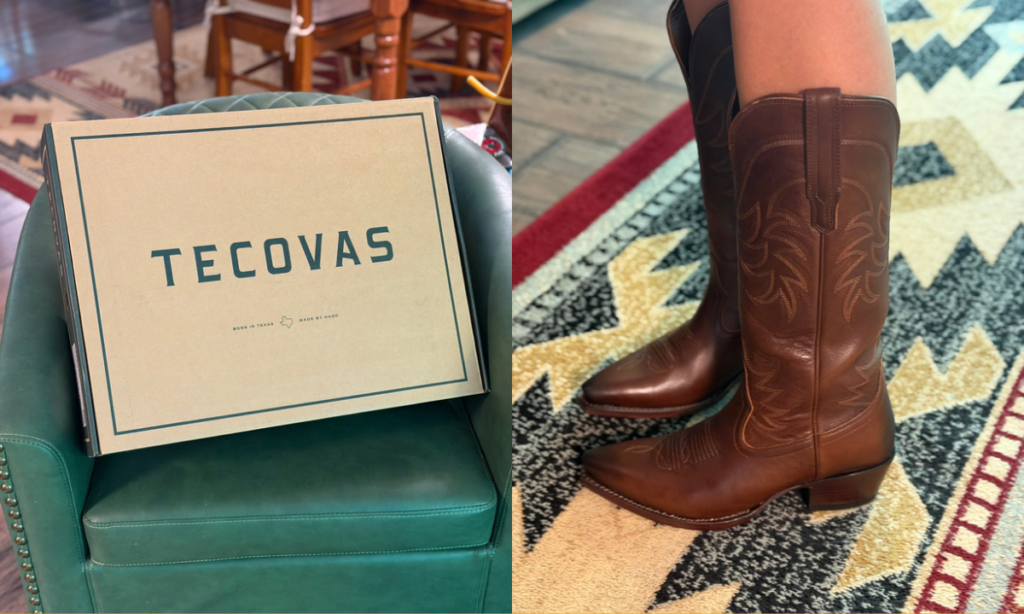
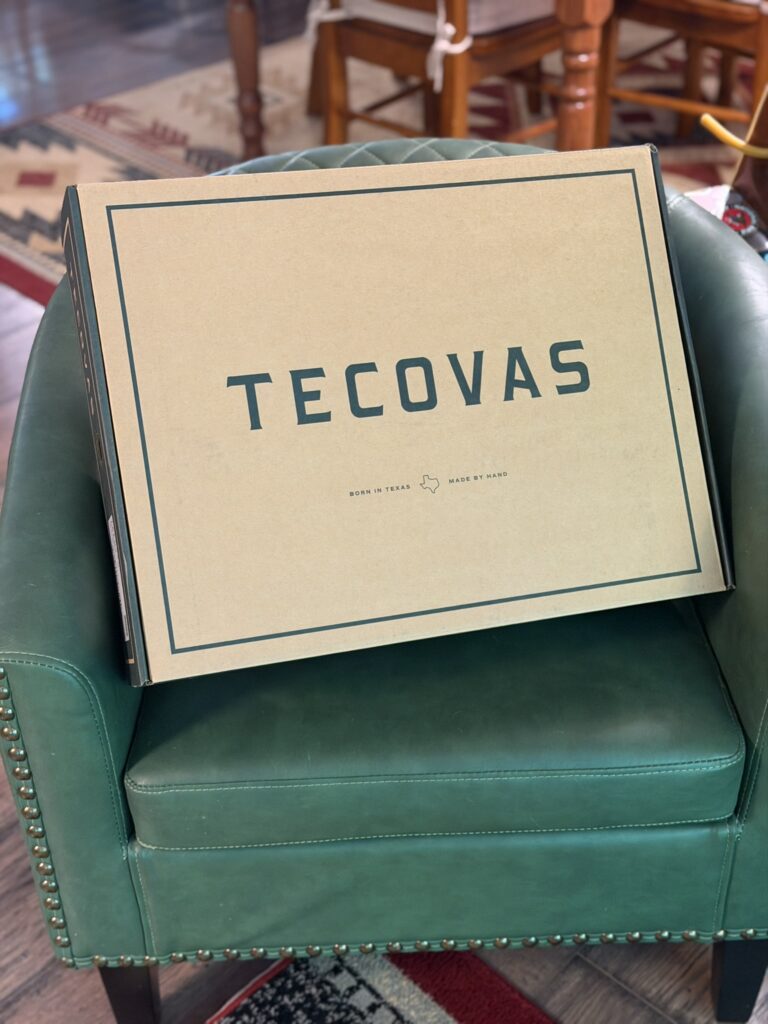
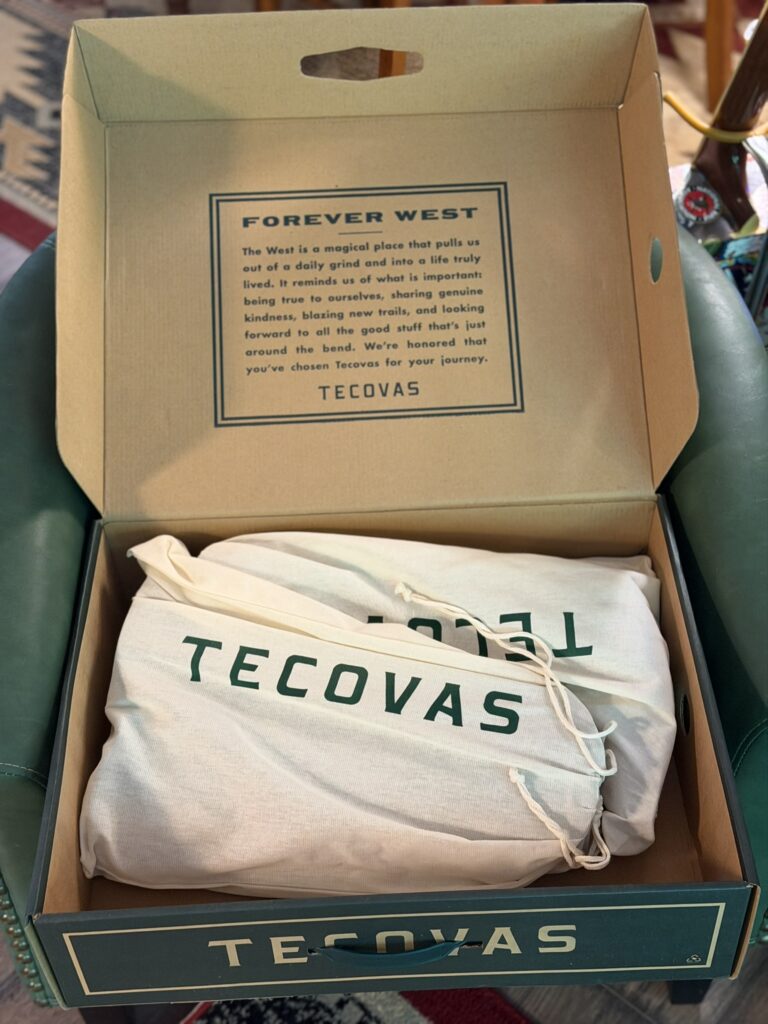
The box will not solve the sizing part, but it does give you that first read on the leather. With the Annie, that smell was there as soon as I lifted the lid. Not chemical or plasticky. Just that warm leather smell you hope for when you open a good pair of boots. It is a small thing… but I truly appreciated that part.
The comfort out of the box is genuinely unusual in this category. My first full day in the Annie was not a gentle break-in test. It was 7 a.m. milking, fence mending, and chasing my mare across a soggy pasture after she decided the gate was a suggestion rather than a boundary. I did not get a single blister. The heel fit held, the shaft did not rub, and I was not rationing my steps by the afternoon, the way I have done in nicer boots that needed more negotiation before they settled in. Out-of-the-box comfort in a traditional leather Western boot is not the default. Tecovas earns that claim.
Tecovas Leather Quality and Care After Months of Wear
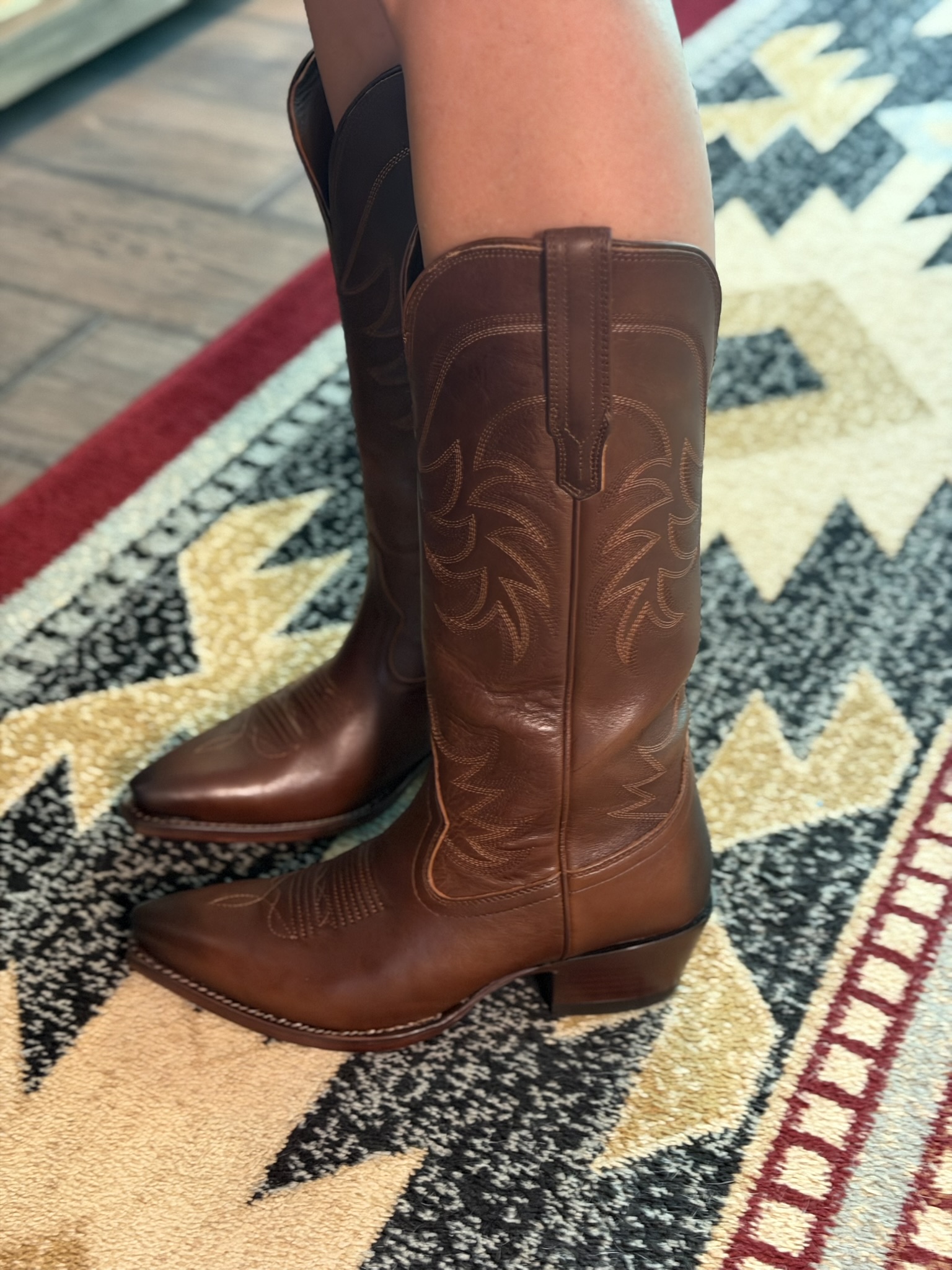
I have not done much to these boots beyond basic conditioning a few times, nothing elaborate. That is partly habit and partly a genuine test of how the leather holds up without constant maintenance.
The Sequoia cowhide on the Annie has responded well to minimal care. The color has stayed even, deepening slightly at the toe and heel counter in the way good leather does as it starts to shape around your foot. The shaft has not faded or gone dull, which matters because color fading on darker Tecovas leathers is one of the real complaints that circulates about the brand.
Sequoia is a warm cognac-brown rather than a deep saturated color, and I think that works in its favor. It is not fighting the leather’s natural variation the way a navy or a dark burgundy might.
The stitching on both the Annie and the Maggie still looks clean. I have not seen any thread pulling away from the shaft or any seams starting to work themselves open at stress points. After months of regular use that includes real outdoor wear, that is what I want to see. Cheap stitching on a leather boot shows itself quickly. This has not.
The one thing I would tell anyone buying Tecovas is to condition the leather before the first wear, or at least soon after. The boots do not need it to be comfortable, but real leather benefits from it, and getting ahead of that before you put any real miles on the pair gives you a better starting point. A basic leather conditioner is all you need. You do not have to overthink it.
Tecovas Quality Complaints: What to Take Seriously
Here is where I will not paper over the feedback.
There are real complaints out there, and some describe specific problems that would bother me too: heel counters losing shape within the first few months, rubber heel caps starting to lift, color fading on darker leathers—navy in particular—going grey before the boot has had any real chance to earn that change, sizing that runs differently across styles, and warranty claims that some buyers feel were handled too rigidly.
These come from real buyers with real boots, so I do not think they should be dismissed.
What I think is actually happening: Tecovas is producing at a much larger scale than it did in its earlier years, while still working in a category where leather, fit, finishing, and handwork naturally vary from pair to pair. That leaves more room for inconsistency than you would see from a smaller-batch maker.
Some buyers have clearly received pairs that should have been better, and that deserves to be taken seriously. But a few bad experiences do not automatically prove the entire brand has declined. A bad pair is still a bad pair if it is yours. It just does not make every Tecovas boot a bad buy.
My own pairs have not had those problems. After months of regular rotation, the stitching is still tight, the heels are solid, the leather has aged the way it should, and nothing has lifted, puckered, or gone sideways structurally. One person across two pairs is a limited data set. What I can say is that the build on my boots does not look like a brand cutting corners in any way.
I also think some of the “declining quality” conversation comes from Tecovas becoming more visible. Once a Western brand gets bigger, opens more stores, and reaches buyers outside the traditional boot crowd, it is going to attract more scrutiny. Some of that scrutiny is useful. Some of it is just skepticism toward anything that becomes mainstream.
The warranty criticism is the part I take most seriously. If a brand is charging $350 to $400 and building its reputation around craftsmanship, buyers need to feel supported when something goes wrong earlier than it should. That seems to be the area where Tecovas has the most work left to do.
For that reason, I would buy carefully, use the 30-day exchange window if something feels off, and go in knowing that the warranty process may not bend the way you hope.
Tecovas vs. Ariat vs. Lucchese
Ariat makes sense for a specific set of needs, and those needs do not overlap with Tecovas as much as the comparison usually implies.
The Ariats I wore through barn work and horse show seasons did what they were designed to do. The ATS footbed and rubber outsoles hold up on wet concrete, gravel, and Michigan spring mud that will pull a cheaper boot clean off your foot. For ten or twelve hours of physical work around animals, Ariat handles it. The performance engineering is real.
Where Ariat falls short is the long game. The leather on their lifestyle styles creases and stays creased rather than developing depth over time. The sole units are thick and synthetic, which is practical on a barn day but does not give you the same feeling as a traditional leather sole. For hard-use days, that is a feature. For the boot you want to reach for because you genuinely love it, it becomes a tradeoff.
Tecovas is the stronger choice if you want a Western boot that wears like one: leather that breaks in, construction that can be repaired, and a shape that holds up over months of regular use. If the day involves wet ground or long hours on concrete, Ariat is still the right call.
Lucchese sets a different ceiling entirely. The construction, the leather selection, and the way those boots age over years and decades are operating at a level the price reflects. I have had Lucchese boots that took three weeks of careful break-in before I could wear them comfortably for a full day, and I accepted it because the long game is worth it. Boots built to that standard can be resoled again and again, and they can still look better at fifteen years than most boots do at three.
Tecovas does not have that generational record. But in the $300 to $400 range, it gets you more of that experience than anything else I have found: genuine leather, traditional construction, a resoleable build, and a fit that improves over time. It is not Lucchese. For daily wear at a price you can justify, it is the next best thing.
Tecovas Sizing and Fit
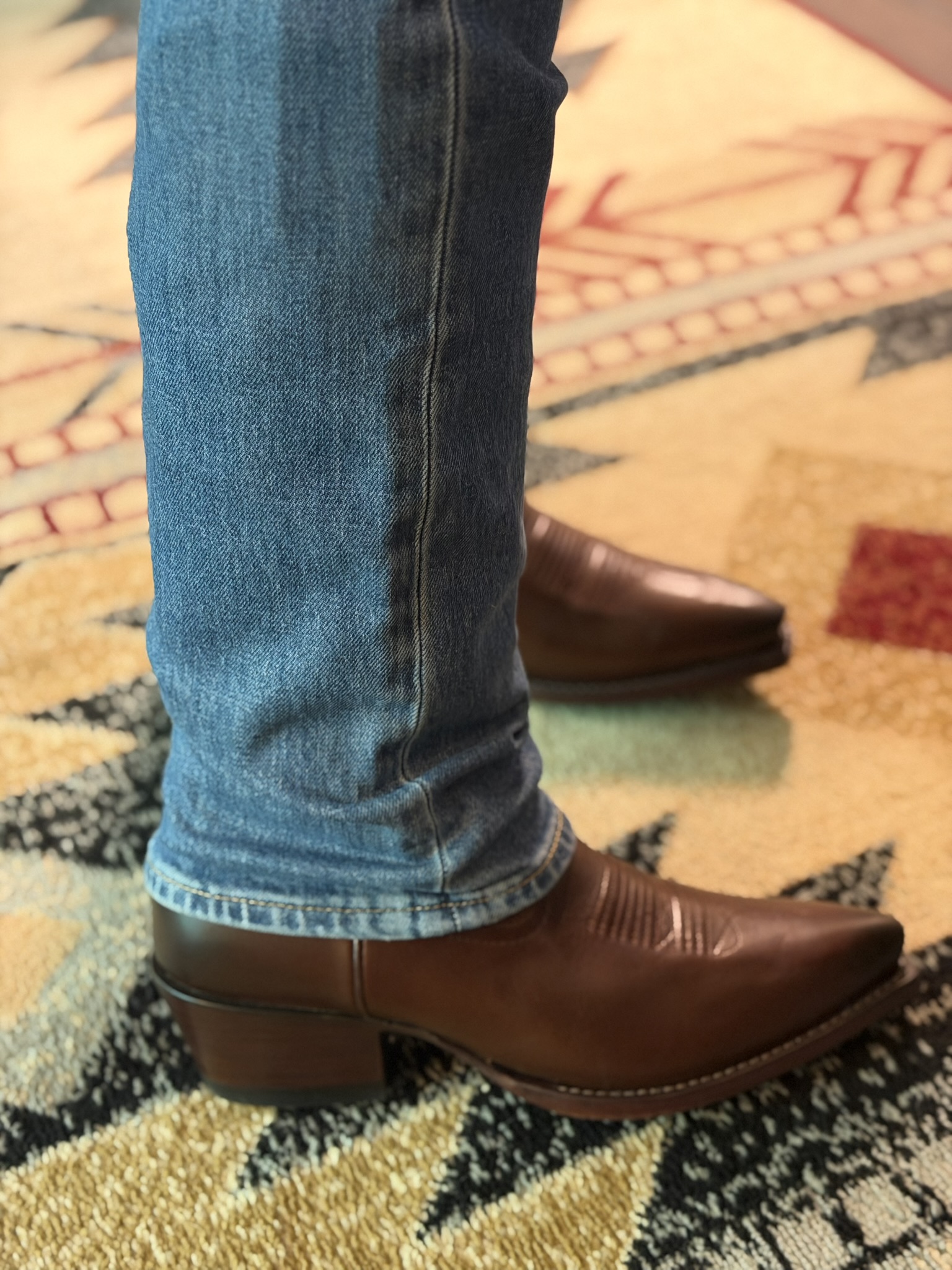
The sizing complaints are worth taking seriously, especially because fit can vary by style.
Tecovas heritage boots generally fit true to shoe size, but a size that worked in one style does not automatically translate to another. The toe shape, last, and shaft fit can vary enough between models to change how the boot feels. The Annie has a snip toe that runs narrower up front than a round-toe boot, and the instep fit can land differently if you are coming from a wider toe box. The Maggie, with its square toe, gives you more room across the front of the foot, which is a different experience entirely, even in the same size.
Read reviews specific to the style you are buying, not the brand in general. Try them indoors before you commit. And use the 30-day free exchange window the way it is meant to be used.
Who Should Buy Tecovas
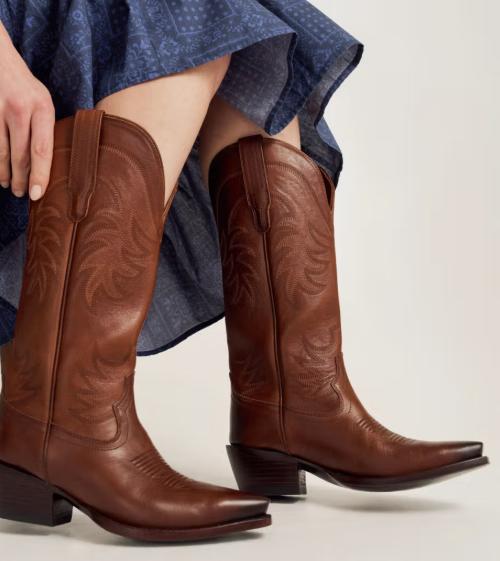
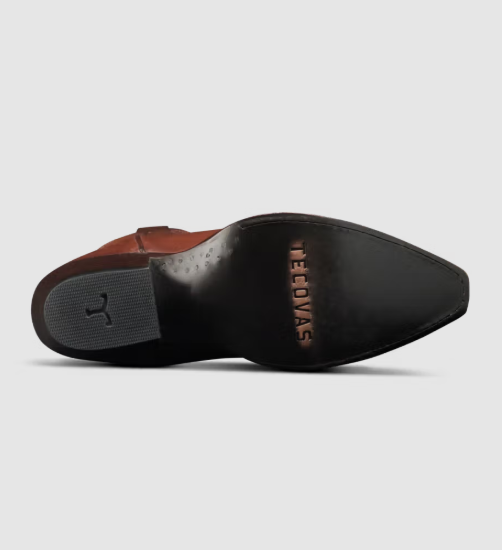
Buy Tecovas if you want a genuine leather Western boot with traditional construction at a price that does not require talking yourself into it. It is the right call for daily Western lifestyle wear, for someone buying their first serious pair of cowboy boots, or for anyone who has been burned by a brutal break-in on a more expensive boot and wants real quality without the punishment.
Stick with the core cowhide styles, take sizing seriously for your specific style, and use the exchange window if the first fit is off. The Maggie is worth considering if you want more room in the toe box. The Annie is the one to reach for if you want something that works across more situations.
Choose Ariat instead if your boots are going to work harder than your outfit. Barn days, ranch work, long hours on wet ground or concrete, situations where grip and endurance matter more than leather character. The ATS footbed and Duratread outsole do things a traditional leather sole cannot, and that engineering is worth paying for when the day calls for it.
Spend up for Lucchese if you are thinking in decades rather than seasons. If you want a boot you will resole, hand down, and still be wearing when the leather has built twenty years of character, Lucchese earns the price.
Final Verdict: Tecovas Boots Are Still Worth It
After months of wear, my answer is still yes: Tecovas boots are worth it for the right buyer. The brand is not without friction, especially as it has grown, but those issues do not change my overall answer. The core boot is still genuinely good. The construction holds up, the leather feels better than the price suggests, and that kind of first-wear comfort is RARE in a traditional Western boot.
Be thoughtful about darker colorways if fading is something that would bother you, go in with realistic expectations around the warranty, and read sizing reviews for the exact style you are buying, rather than assuming the whole brand fits the same.
Tecovas is not perfect, but it gets the big things right: real leather, traditional construction, strong comfort, and a price that still feels accessible. For the buyer who wants genuine Western craftsmanship without spending Lucchese money, Tecovas is absolutely still worth it.