

- Zilker Belts Review: Is a Handmade Belt Worth the Price? - September 18, 2026
- Best Bras For Bell-Shaped Breasts: How To Fix Gaping At The Top - September 9, 2026
- The Best Ariat Alternatives For Premium Cowboy Boots - August 27, 2026
Cowboy boots are very easy to buy with your eyes.
You see the leather color, the stitching, or a toe shape that looks cute with the outfit you wore into the store, and the practical part starts slipping into the background. Then you wear them for an hour and realize the instep is pressing into your foot, the shaft will not behave under your jeans, or the soles are much slicker than they felt on the carpet.
I have been wearing cowboy boots since I was four, but buying a good pair as an adult still took some adjustment. I spent years treating boots as something practical and temporary, so I did not always think about which pair I would still want to wear several years later. That sounds obvious now, but it changed what I was willing to spend and what I expected a pair of boots to do.
For a first pair, start with fit and where you will actually wear them, then let the color and stitching help you choose between the pairs that already work.
At A Glance: What To Check Before Buying Cowboy Boots
- Instep: You want it snug across the top of your foot. Sharp pressure or your foot sliding around is a bad sign.
- Heel: A little heel lift is normal in a new boot. Your whole foot moving or slipping forward isn’t.
- Toes: Your toes should have enough room to rest naturally. Watch for pinching, numbness, or toes touching the end.
- Sole: Choose traction that makes sense for where you’ll actually wear the boots. Smooth leather can get slick on wet or uneven ground.
- Shaft: It should feel comfortable around your calf and sit smoothly under jeans without rubbing, bunching, or creating an obvious ridge.
Cowboy Boots Should Feel Snug, But They Should Not Hurt
Cowboy boots fit differently from sneakers because the instep, which is the area across the top of your foot, helps hold them in place. It should feel secure enough that your foot is not sliding around, although you should still be able to stand and walk comfortably.
A little heel lift can be normal because a new sole starts out stiff and does not bend with your foot right away. Your heel may move slightly until the boot loosens up, but your whole foot sliding forward or feeling as though it may come out is a different problem. Thick socks can take up a little extra room, though they cannot fix a boot that is clearly too large.
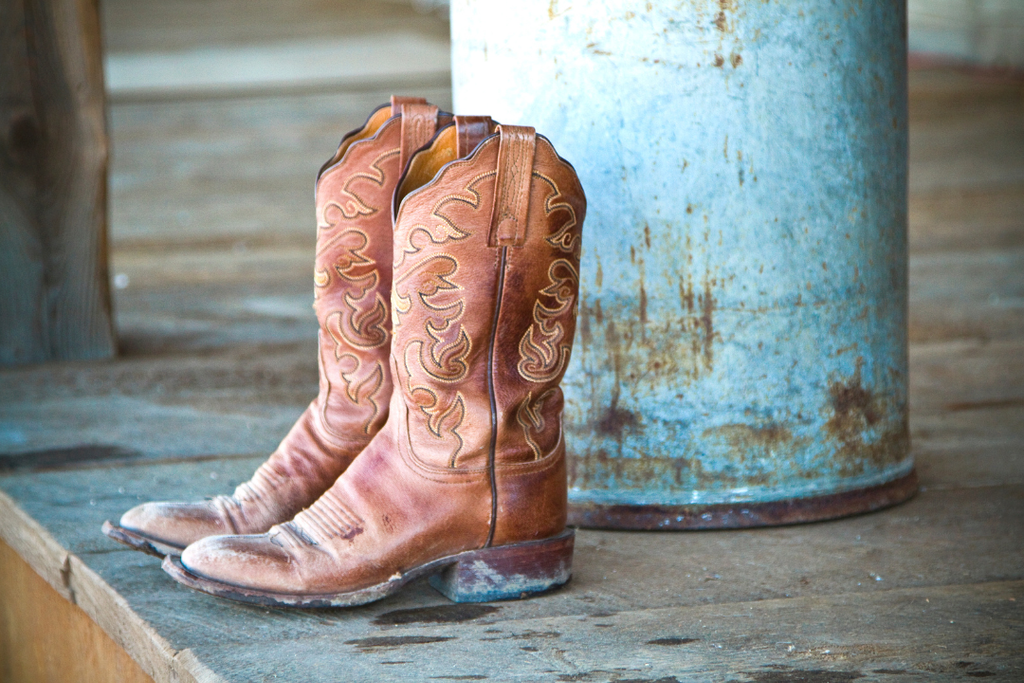
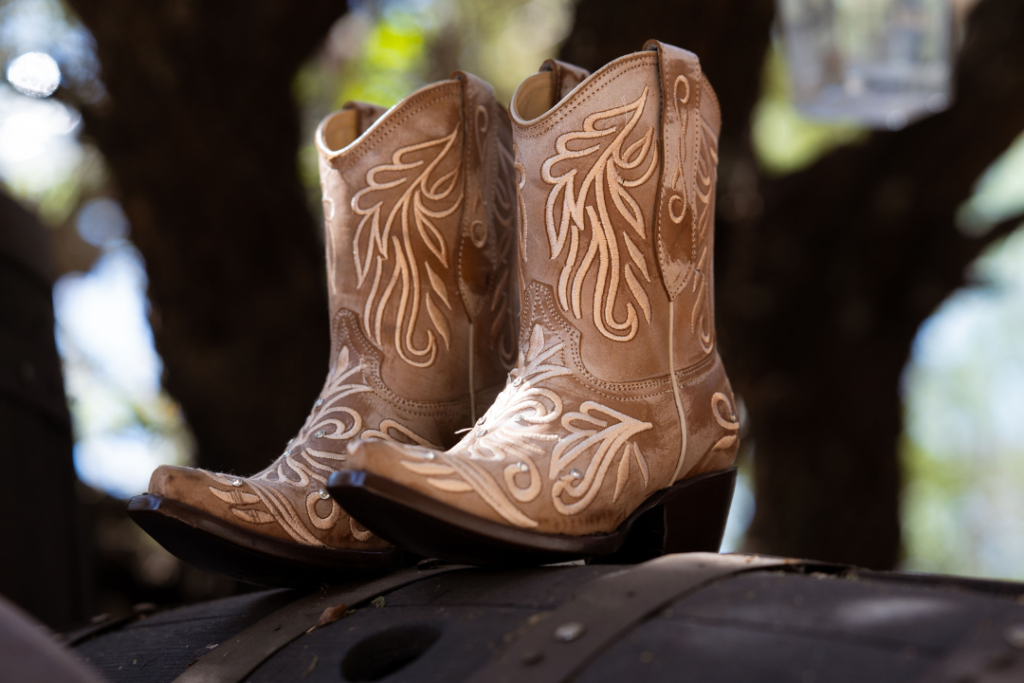
Your toes should rest naturally rather than feeling crowded or numb. Pointed and snip-toe boots often have extra length because the narrow part is built into the shape, so your toes are not meant to fill the entire point. Pay more attention to where the ball of your foot lands, which should line up with the widest part of the boot near where the sole bends.
Try on both boots and leave them on for at least ten minutes, since most people have one foot that is slightly larger and the difference may not show up during one quick walk past the mirror. Shopping later in the day also gives you a more realistic fit, since your feet naturally swell a little as the day goes on, and you should wear the socks you expect to use with the boots.
I am careful with any version of “the leather will stretch” because leather can soften and relax a little across the width, but it will not add length or completely change the shape of the boot. When your toes are cramped or a seam is pressing into your foot in the store, wearing the boots longer may only make you regret keeping them.
For an online order, check the return policy before wearing the boots outside, then walk around on clean flooring and keep them on long enough for the excitement of opening the box to wear off.
Think Past The Outfit You Are Buying Them For
I understand buying boots for a particular outfit or occasion because I have done it too, but the event lasts one day and the boots are still in your closet afterward. Before buying, picture an ordinary week that includes the weather, the amount of standing you do, and any gravel, wet grass, or polished floors you are likely to cross.
Traditional leather soles look sleek and work well for dancing because they move easily across the floor, although new leather can be slippery on tile, smooth concrete, snow, or wet pavement. Rubber soles are easier on wet ground, while hybrid soles use leather with rubber in the higher-wear areas.
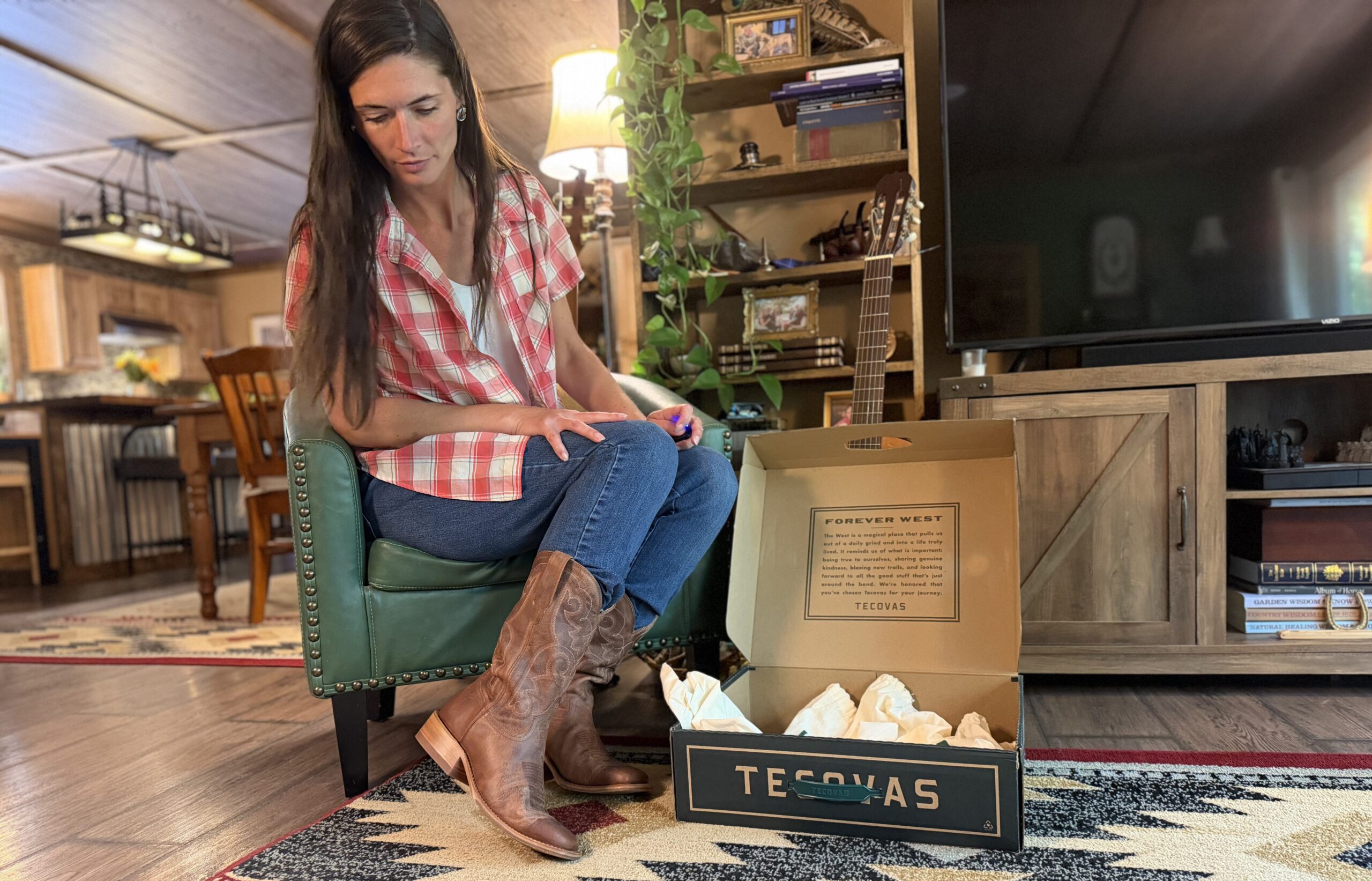
My Tecovas Maggies have a hybrid sole, and that is one reason they fit my life so well. I can wear them outside without worrying about every damp patch, while the shape and finish still work with a dress later.
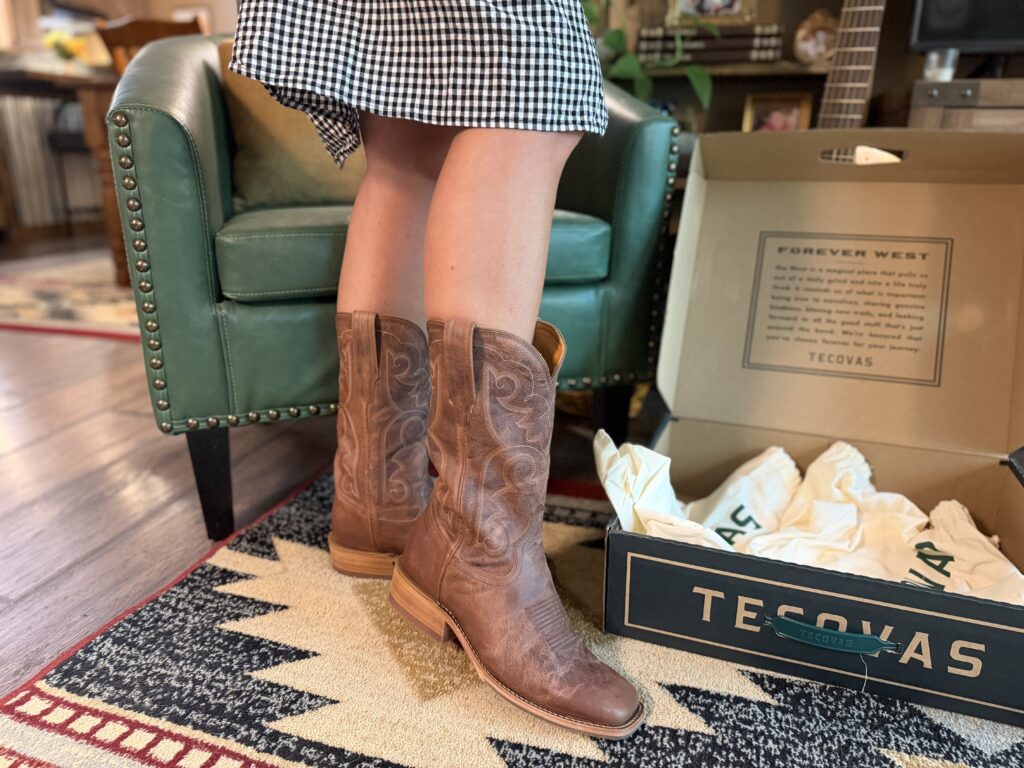
The heel also changes how stable a boot feels. A low roper heel may feel more familiar if you usually wear flats or sneakers, while a traditional cowboy heel is higher and angled. Some women’s fashion boots go taller, so it is worth walking in them for more than a few seconds.
Carpet can make almost any boot seem stable, which is why I would try to find a hard surface in the store. When you feel pushed too far onto the front of your foot or unsteady every time you turn, several hours of standing will probably make it worse.
Riding, farm work, and job-site use add concerns such as water resistance and toe protection, while someone buying boots mainly for dinners or casual outfits may care more about a slimmer sole and a comfortable heel.
Try The Boots With The Clothes You Actually Wear
A boot can fit your foot beautifully and still be irritating under your clothes, especially when the shaft is wider or taller than you expected.
The shaft is the part that comes up around your lower leg, and its shape affects how your jeans fall even though most people are looking at the toe when they first try the boots on. I had a pair of taller, wider-shaft Ariats that looked fine from the ankle down until I wore them under straight-leg jeans and the shaft kept catching the denim, making it bunch around my calves.
Instead of bending over every few minutes, I would try to step on the edge of my pant leg and squirm the fabric back down, which was neither subtle nor graceful. The boots were not bad; they simply did not work with the jeans I wore most often.
Slim jeans and lightweight denim tend to show more underneath, while straight-leg and bootcut jeans usually leave more room. Wear your usual jeans to the store or bring a pair with you, because a boot that looks chunky on its own may look balanced once the pant leg is in place.
The shaft deserves the same attention with dresses or skirts, since the top can press into your calf or rub while you walk, and decorative stitching becomes much more visible when it is part of the outfit.
Once you know the shaft works with your clothes, look again at the toe. A round toe gives you a traditional look, while a snip toe, which tapers to a narrow, slightly squared-off point, often feels dressier. Square toes range from fairly narrow to very broad, so two pairs with the same general label may look nothing alike.
I like a square toe, but I still pay attention to the width because a broad work-style square toe feels very different from the softer square toe on my Maggies.
Choose A Leather You Are Willing To Live With
Cowhide is a practical starting point because it is widely available, fairly easy to care for, and offered in finishes that can look polished or rugged.
Medium and darker browns are easy to wear with denim, and small scratches usually blend in as the leather ages. Black can look sharper with dark jeans or dresses, while very light leather may ask more of you if every new mark will bother you.
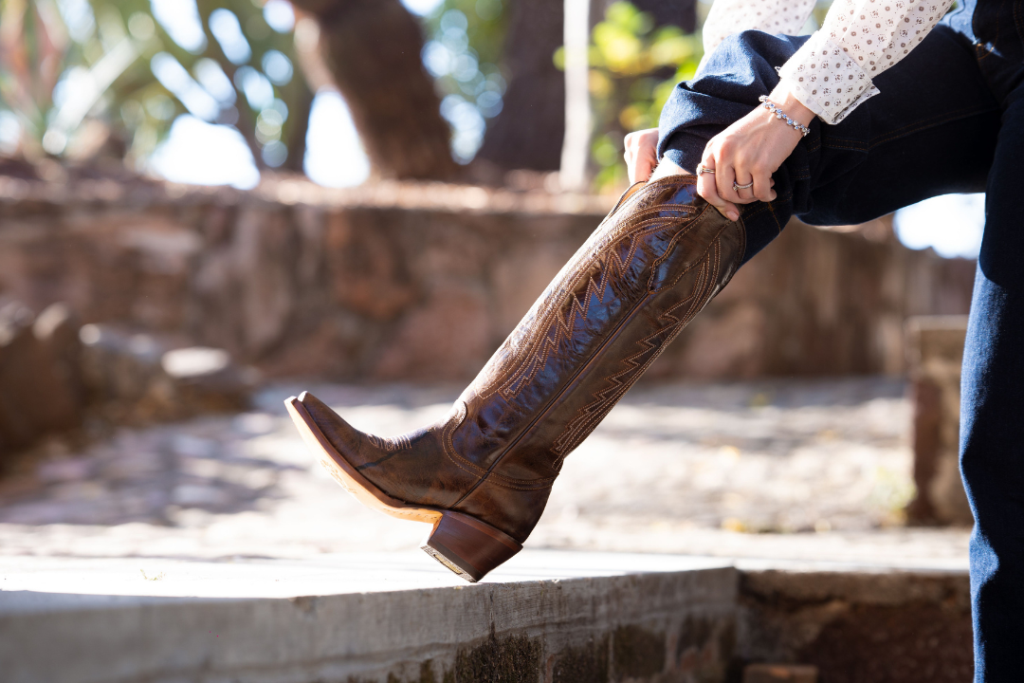
Suede and roughout have a softer, casual look and require different care from smooth leather, especially if you live somewhere wet or snowy. Exotic leathers such as ostrich, caiman, alligator, python, and lizard can raise the price quickly and have their own care needs, so I would choose one as a first pair only when that leather is the reason you want the boots.
Whatever leather you choose, look closely at the finishing. Small differences in grain and color are normal, but loose threads, separation around the sole, or a heel that looks crooked deserve another look.
Product descriptions may mention a Goodyear welt, where the upper (the leather portion of the boot above the sole) is stitched to the sole in a way that can make resoling easier; a stacked leather heel, made from layers of leather built up to form the heel; or lemonwood pegs, small wooden pegs traditionally used to help secure parts of the sole Of those details, the welt is the one I’d care about most if you want a pair that can have more life beyond the original sole.
You Do Not Need To Start With A Luxury Pair
Cowboy boots range from well under $100 for inexpensive fashion pairs to a few hundred dollars for a solid everyday pair, while handmade or exotic boots can easily run $700 to $2,000 or more. Spending more may get you better leather or more traditional construction, but price is not a shortcut to comfort, and an expensive pair can still be the wrong shape for your foot.
My Tecovas Maggies, which currently sell for $375, felt expensive to me at first because I had spent years thinking about boots as temporary. I had been riding since I was four and went through plenty of pairs simply because my feet grew, so spending more never made much sense when I knew I could outgrow them within a season or two.
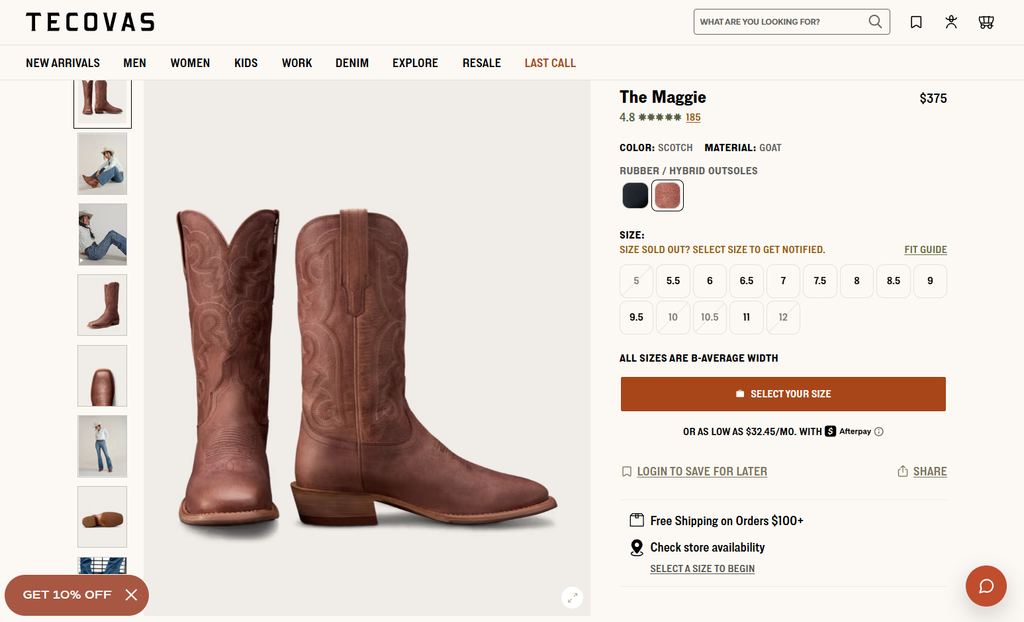
Once my feet stopped growing, I could finally shop for a pair I planned to keep rather than one that only needed to survive until the next size. I found Tecovas easier to shop than some of the Western stores I’m used to, where buying boots meant wandering into a dimly lit back room and digging through whatever happened to be in stock. At Tecovas, there was somewhere comfortable to sit, someone ready to help with sizing and fit, and even a drink offered while I tried things on. It felt less like I was being left to figure it out myself and more like they actually wanted me to take my time and find the right pair.
What made Tecovas worth the price to me was how comfortable they were right away. One morning, I put them on to milk the goats, move animals into different pastures, weed, and rake, then later changed into a dress for date night, wiped the boots with a paper towel, and put the same pair back on to go dancing. In my experience, that is highly unusual for Western boots, which often need more breaking in before I would want to wear them through hours of chores and still keep them on for the rest of the night.
I would be careful about assuming any pair will feel that easy simply because it costs more, but the immediate comfort of the Maggies made the higher price worthwhile for me. The Maggies are not perfect for everything, though. My Mucks are always going to be the better choice for spring mud in Michigan or a day when I know I’ll be traipsing through puddles.
Tecovas will not fit every foot, and trying more than one brand is still useful. Ariat offers a much larger selection with plenty of work-oriented options, Tony Lama and Justin cover a broad range of traditional Western styles, and Lucchese moves farther into luxury pricing. Starting at a moderate price may also make sense while you learn what you prefer, especially if you are still deciding whether you want a taller shaft, a leather sole, or a different toe the next time you shop.
Do Not Make A Long Event The First Test
Even comfortable boots may need time for the sole to flex and the leather to settle around your foot, so wear them around the house first and then try a short dinner or errand where you can go home if one spot starts rubbing.
Check your heels and the top of your foot when you take them off, because a blister, numb toes, or a deep pressure mark is a reason to reconsider the fit rather than assuming several more painful wears will solve it.
A wedding, concert, or full day of travel is a poor first trial because by the time you realize there is a problem, the extra shoes you left at home are not much help.
The pair I wear most is the one I can pull on without wondering how long I will last in it, and over time the leather picks up a few marks, the sole bends more easily, and the boots become part of what I wear rather than something I have to plan around. A good pair should be comfortable enough to wear now and well-made enough that you are still reaching for them later. Happy boot shopping!