


Ordering custom employee shirts sounds like a simple feat. But all too often, what started as a great mock-up turns into a disappointing print. Even if the first batch arrives fine, the second order might come in a slightly different shade, have thicker print, or be inconsistently sized. Now you’re explaining to your team why half the staff looks put-together, and the other half looks like their brand new shirts have already been through a few rough weeks.
These are the brands that do printing right, from a high-quality design & ordering experience to a consistent, sharp product.
Best Companies for Custom Employee Shirts At a Glance
| Company | Typical Order Size | Service Offerings | Turnaround | Customer Support | Best For |
| BlueCotton | 50–300+ | Screen printing, embroidery, DTG, and discharge | ~7–10 days | Hands-on, human support | Businesses needing consistent, repeat orders |
| Custom Ink | One-offs to bulk prints | Screen printing, embroidery, and DTG | ~10–14 days | Structured, process-driven | Easy group orders across teams |
| 4imprint | 50–500+ | Screen printing and embroidery | ~7–12 days | Strong account management | Branded kits and promotional campaigns |
| Carhartt Company Gear | 25–200+ | Embroidery and limited printing | ~10–15 days | Solid, brand-backed | Durable uniforms for physical work |
| RushOrderTees | No minimum (1 to bulk) | Screen printing, HD Digital printing, and embroidery | 9–12 business days (as fast as 2 with rush) | Real people, 7 days a week | Small or last-minute orders with free shipping |
| Printful | No minimum (1 to bulk) | DTG, DTFlex, embroidery, and all-over print (screen printing on 500+) | 2–5 business days to make, plus shipping | 24/7 support | Remote teams that need shirts shipped to different addresses |
| Lands’ End Business | No minimum on Lands’ End labeled products | Embroidery, screen printing, digital printing, and heat transfer | Not listed; ask before ordering | Phone support, 7 a.m. to 7 p.m. CST | Polished, office-ready staff apparel with an easy return policy |
BlueCotton

BlueCotton is big enough to handle bulk orders, but still runs like a company where someone actually looks at your order before it goes to print.
They run their production in-house, which anyone who’s dealt with an outsourced vendor knows the value of. If anything needs fixing, you’ll be talking to a human CS rep who’s in the same building as the printers themselves. And for a printer that isn’t cutting corners on quality control, getting orders out in 7–10 days is solid, and they’re generally upfront when timelines shift.
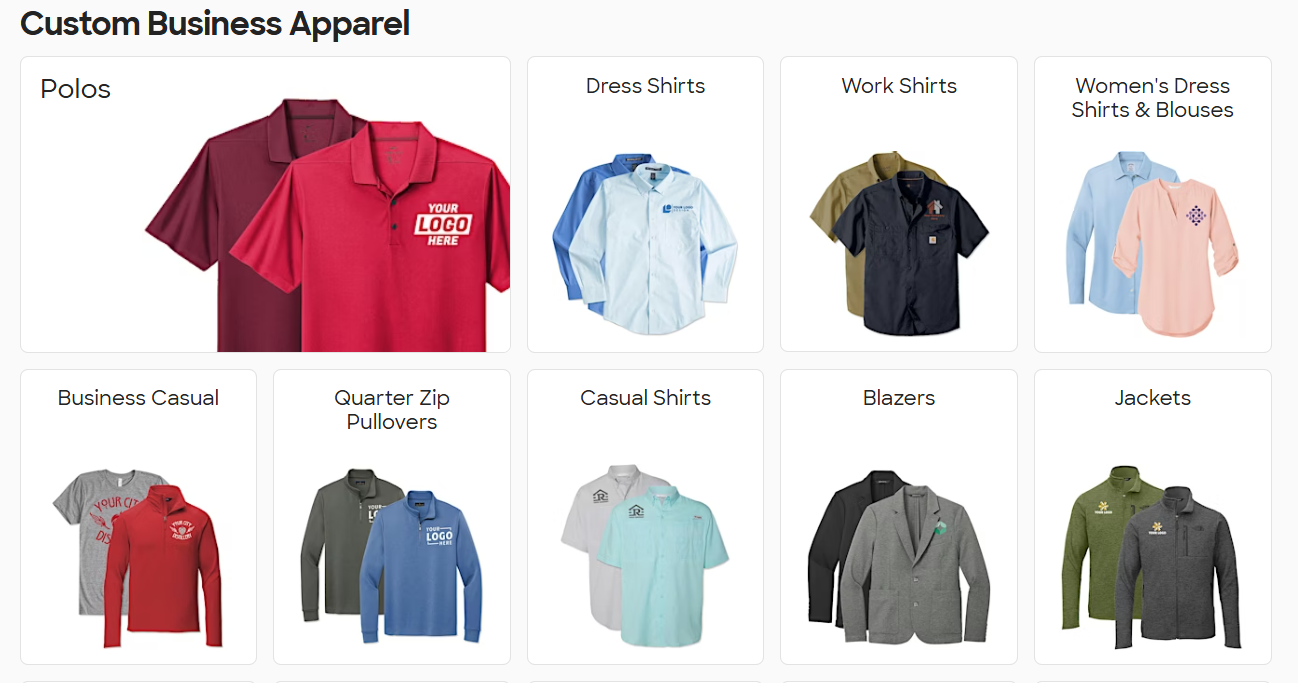
Their design studio makes it easy to place names and logos exactly where you want them and the Quick Price tool shows you how much it’ll cost. Each order goes through a 9-step quality check for added confidence. And if you want a sample, you can get one for free with orders over 250 pieces or $100 credited back for smaller orders. They have a wide selection of apparel to choose from.
While standard shipping is free and arrives within 10 days, rush options are also available for an added fee. You can choose between 1-day, 3-day, and 5-day rush options when you need your order quick.
Overall, I’d trust BlueCotton for employee uniforms, onboarding kits, or anything you’ll reorder regularly. It feels like a partner, not just a printer.
Where it stands out:
- Strong consistency across repeat orders
- In-house production (less outsourcing, fewer surprises)
- Better handling of softer fabrics and premium blanks
- Customer support that actually responds like humans
Where it’s not for everyone:
- Not the cheapest option for one-off orders
- Overkill if you just need a few shirts for a casual event
Custom Ink
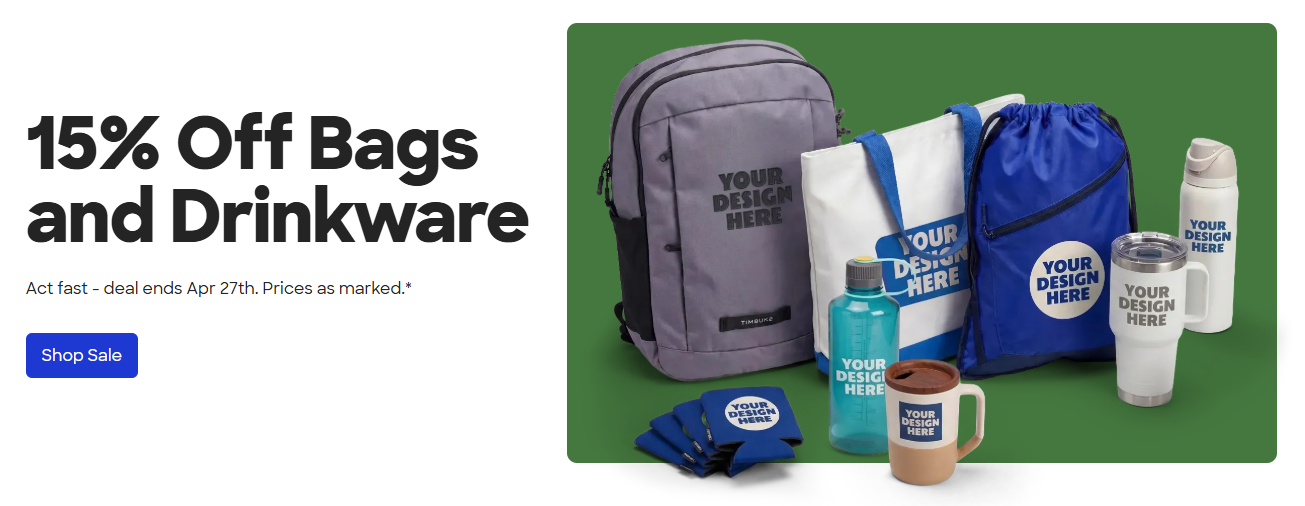
Custom Ink is usually the first name people come across when looking for custom apparel, and for good reason. They’ve made the ordering process incredibly easy — their design tool is one of the better ones available, and the group ordering feature is genuinely useful if you’ve got employees in different locations ordering their own sizes.
The shirts themselves are solid. I’ve ordered heavier tees through them (think Gildan Ultra Cotton or Hanes Beefy-T), and they felt durable. They’re good for events or uniforms that take a beating. There are plenty of options to choose from, and there’s no minimum, so you can outfit a new hire without worrying about extra fees.
Free standard shipping takes up to two weeks, but rush orders are an option. They offer One-Week Rush Delivery for an additional 15% of your order and 3-Day Super Rush Delivery for an additional 30% of your order.
Where it stands out:
- Easy group ordering system with no minimum order
- Large catalog with familiar brands
- Reliable for straightforward bulk orders
Where it falls short:
- Print can feel abnormally thicker, depending on the method
- Less guidance on fabric and print pairing
- Feels more transactional than consultative
4imprint
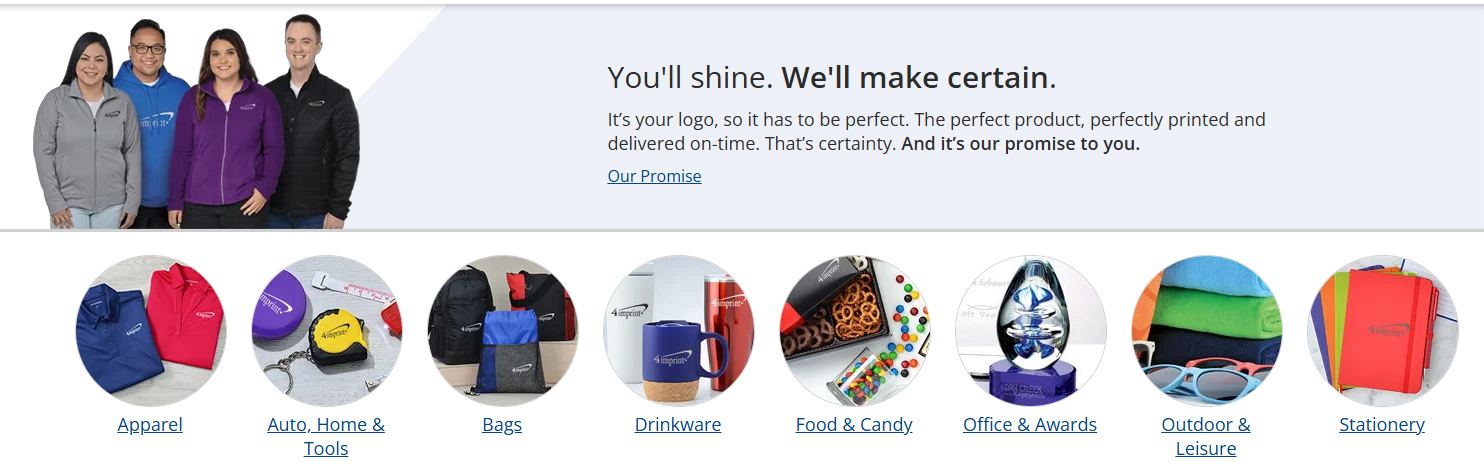
4imprint is less about “just shirts” and more about full branded kits. If you’re putting together onboarding boxes or event giveaways with everything from shirts and hats to drinkware and pens, they’re convenient.
You can order free samples to check out the product before committing to a bulk order. If you need something in a hurry, select items are available for 24-Hour Service for a $40 fee. Keep in mind that you’ll have to approve your mock-up by the deadline to receive your items on time. Your artwork can be kept on file for easy reordering.
The tradeoff is that apparel isn’t their main focus, and you can often tell. They have a more limited color palette available, and the focus seems to be on bulk printing and not on wearable merch. I tried one of their midweight tees, and it was fine, but it didn’t feel curated. More like it was selected to fit into a larger promotional catalog than to be the best shirt on its own. But if you’re planning to expand your merch beyond shirts, this is a great option.
Where it stands out:
- Huge range of branded products
- Good for bundled orders
- Solid logistics for large campaigns
Where it falls short:
- Apparel quality can feel secondary
- Less control over fabric and print nuance
Carhartt Company Gear
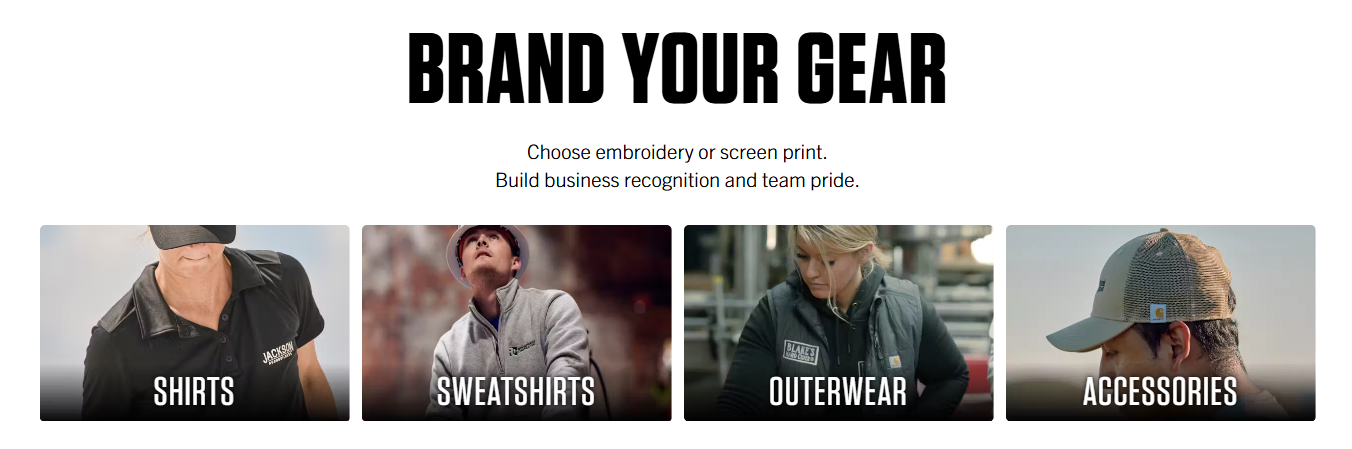
Carhartt Company Gear specializes in durable products (think heavier tees, work shirts, and outerwear). It’s a suitable option if your company wants uniforms that can take a beating and look good doing it.
They currently offer free Ground Shipping (2-7 business days) for orders over $99, with 2-Day and Next Day Shipping available for additional fees. For orders below that threshold, Economy Shipping (7-10 business days) and Ground Shipping are an additional $7.
You can get embroidery, screen printing, or alternative transfers depending on the material of the shirt you choose.
A contractor recently gave me a promotional shirt from them, and I wore this heavier tee for a full day of errands and yard work. It held up great, but it also ran warm. Definitely not something I’d pick for a hot office environment.
Where it stands out:
- Extremely durable fabrics
- Strong brand recognition
- Great for trades, logistics, and field teams
Where it falls short:
- Limited style variety
- Not ideal for lighter, more modern fits
RushOrderTees
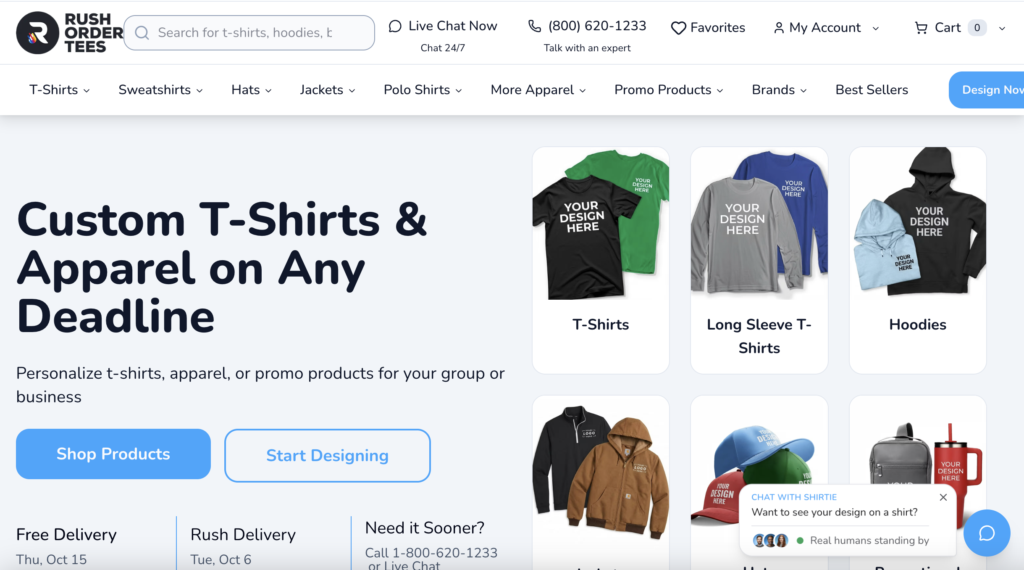
RushOrderTees is one of the best companies for custom employee shirts if you want to place an order without worrying about minimums. You can order one employee shirt or a few hundred, with shipping free on every order. There’s over 50 brands to choose from, including top-brand names like Nike, Carhartt, and Under Armour, so you’re not stuck with basic blanks.
They also offer a range of printing options, depending on the size of your order. If you’re ordering fewer than 12 shirts, HD Digital printing is your only choice. Once you hit 12 or more, you can pick between HD Digital and screen printing. Screen printing is usually cheaper for simple designs with just a few colors, while HD Digital is better for detailed, full-color artwork. They also offer embroidery for polos and jackets.
Standard delivery takes 9 to 12 business days, but you can pay for rush shipping and get your order in as little as 2 business days. And if you have questions, real people answer by phone, chat, and email 7 days a week!
Where it stands out:
- No minimum order and free shipping on almost everything
- Rush options for last-minute orders
- Wide range of brand-name apparel
- Customer support 7 days a week
Where it falls short:
- Orders under 12 shirts can only use HD Digital printing, so the print may look and feel different if you switch to screen printing for a bigger order later
- Rush shipping does costs extra
Printful
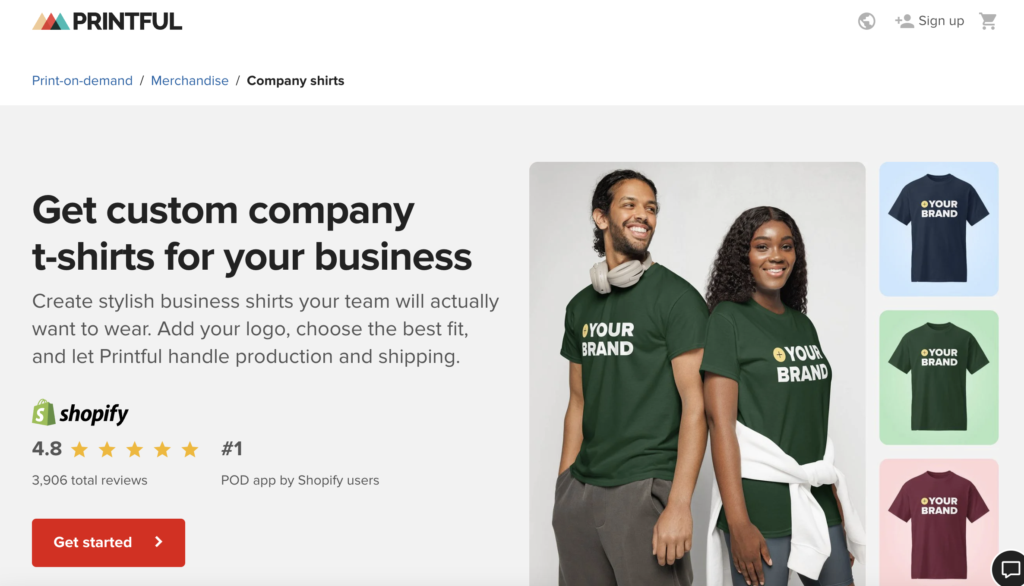
Printful started out helping online stores sell custom products, and that setup works well for teams too. There’s no minimum order, so you can order one shirt or outfit the whole team. You can design right on their site with the free Design Maker. It’s a simple tool where you can upload your logo, add text or clipart, and even remove the background from an image, so you don’t need any design experience.
Printful is also a good pick if your team works in different places. With their MerchShare tool, you send your team a link, and each person picks their own size and color without being able to change your design. Each order shows up in your Printful dashboard for you to approve, and then Printful ships it straight to that person’s door.
They also have a free Quick Store if you want to sell branded merch to customers. It’s a simple online shop you can fill with shirts, hoodies, hats, and more, and people pay for their own items at checkout. It only works for shoppers in the U.S., though.
As for printing options, they offer DTG printing, DTFlex (their direct-to-film option), embroidery, and all-over print. Most orders are made within 2 to 5 business days, then shipped based on where they’re going.
Where it stands out:
- No minimum order, so you can order just what you need
- MerchShare makes it easy for employees to pick their own sizes
- Worldwide shipping for remote or spread-out teams
- Support available 24/7
Where it falls short:
- Bulk discounts only kick in when you order at least 25 of the same item
- Screen printing is only available on orders of 500 or more
- Delivery time depends on where you’re shipping, so it’s harder to plan around a set date
Lands’ End Business
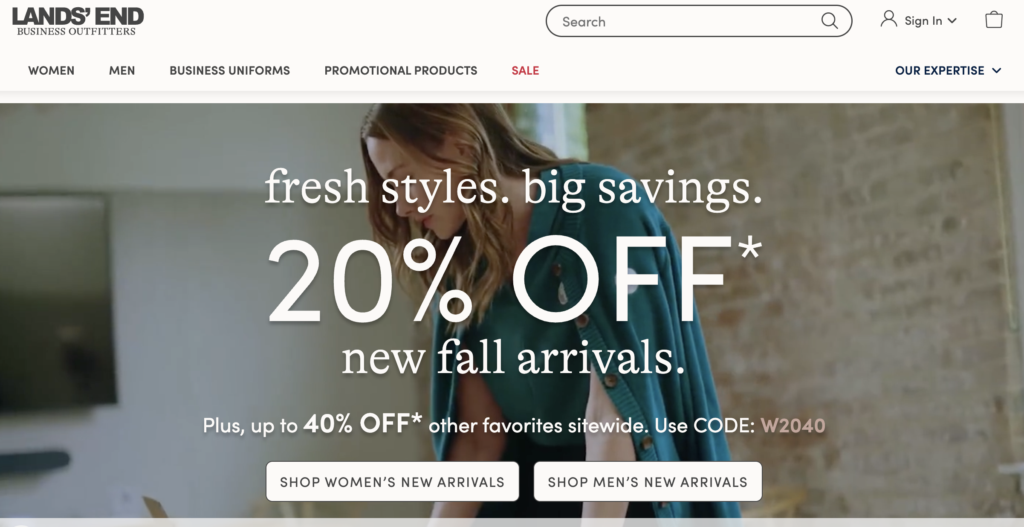
Lands’ End Business is the work side of the Lands’ End brand, and it’s a good fit if you want polos, button-downs, and jackets that look polished and last. There are no minimums for embroidery or direct-to-garment printing on Lands’ End labeled products.
They offer embroidery, screen printing, digital printing, and heat transfers, and embroidery comes with more than 300 thread colors. Before anything is made, their team turns your logo into an embroidery file and emails you a virtual sample to approve, so you can see how it’ll look first.
They also offer a guarantee, which in my eyes is a big plus. If you’re not happy with an item, you can return it at any time, even after your logo has been added. You can also set up a company store with your branding and product picks, so staff can order what they need on their own.
If you’re looking for embroidered shirts, this is not what I would pick for a speedy delivery. Lands’ End Business states that standard shipping for embroidered orders takes 22-27 business days. Promotional products are slated at 14-17 business days.
Where it stands out:
- No minimums on Lands’ End labeled products
- Virtual logo sample before your order is made
- Returns accepted anytime, even on logo items
- Company stores for easy team ordering
- Large range of sizes S-3XL on all styles and XXS-5XL on select styles.
Where it falls short:
- Long turnaround times
- Products from other brands they carry come with minimum order quantities
- Logo fees change by product, so you’ll need to check each product page for the cost
- Volume discounts start at 5% and only kick in once you spend $1,000
How to Get Employee Shirt Orders Right the First Time Around
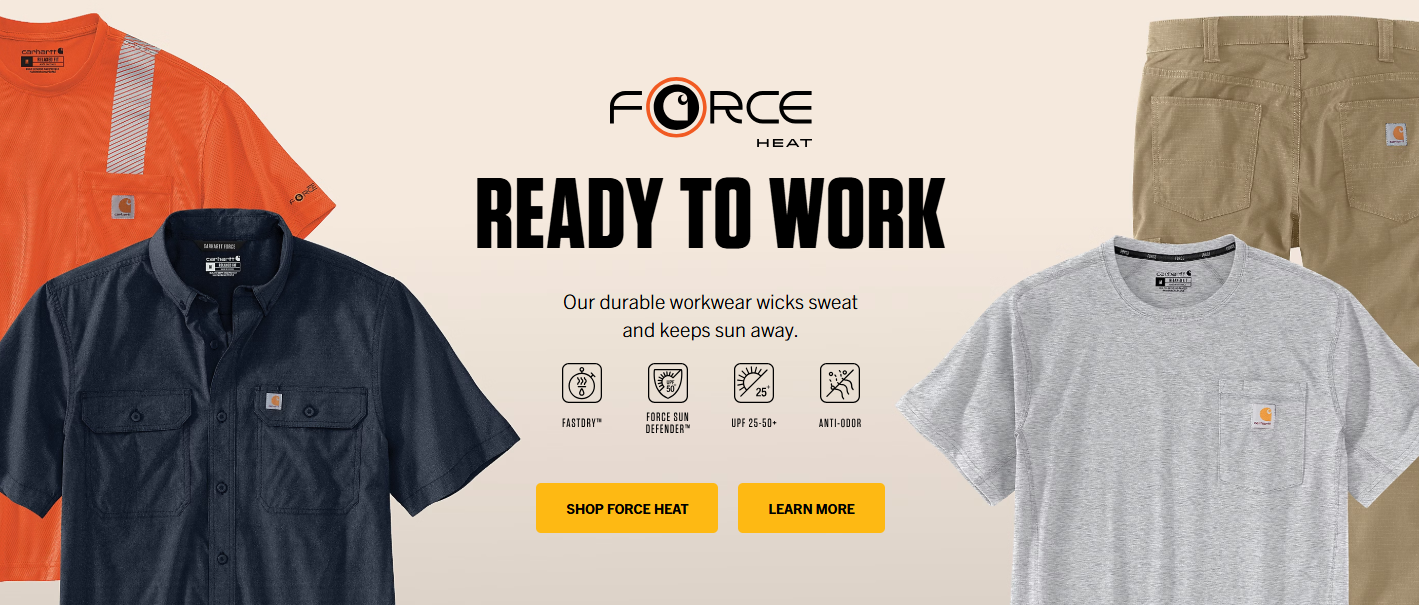
Most brands will show you a wall of options that all sound similar: soft cotton, premium cotton, ringspun, blended, lightweight, and midweight.
In reality, you’re usually choosing between a few core categories:
- Heavier, more structured cotton (durable but less soft)
- Midweight ringspun cotton (balanced and safe)
- Softer retail-style blends (more comfortable, but slightly less rugged)
Fabric can feel different once it’s printed. A cheaper cotton tee can turn stiff under heavy ink. A softer ringspun shirt can feel great, but only if the print method suits the fabric. Most platforms don’t explain this well, but a good vendor will point you in the right direction before it becomes a problem.
Print Method Can Change Everything
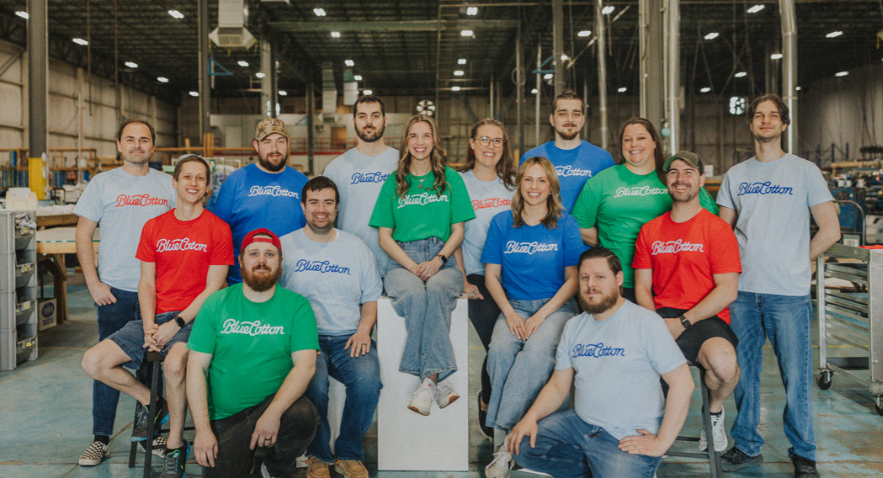
Two shirts can be the same blank and still feel completely different, depending on how they’re printed.
For example, screen printing is durable and consistent for bulk orders, but it can feel heavier on softer fabrics if not handled well. DTG (direct-to-garment) works better for detailed designs and lighter prints, but it depends heavily on fabric quality.
And then there are variations like discharge printing, where the ink actually removes dye from the fabric instead of layering more on top. When it’s done right, the print almost disappears into the shirt. When it’s not, it looks uneven.
Where Custom Employee T-Shirts Go Wrong
Custom T-shirts are easier than something like jackets, but that doesn’t mean they’re foolproof. The biggest mistake I see is people treating them like a low-stakes purchase. They assume any vendor can handle it, pick a shirt based on price, upload a logo, and move on.
This might work at first. After all, printers want your business and will do everything they can to get the first batch right. Everything is fresh, carefully handled, and closely checked.
The problems don’t tend to show up until the second or third order. That’s when the small inconsistencies start creeping in:
- The black looks slightly faded this time
- The print feels thicker or stiffer
- The fit runs differently even though it’s “the same shirt”
None of these is a deal-breaker on its own, but together, they make your team look like they ordered from three different vendors.
And unfortunately, once shirts are distributed, fixing them isn’t simple. This is why consistency across reorders ends up being the thing that matters most, even more than how the first batch looked.
How to Choose the Right T-Shirt Vendor for Your Team
A restaurant team, a startup office, and a field crew all need something different.
- Daily uniforms: Durability and consistency matter most
- Office or client-facing wear: Comfort and fit matter more
- Events or short-term use: Speed and price matter more
If you don’t define that upfront, you’ll end up optimizing for the wrong thing.
Think Beyond the First Order
It’s easy to compare pricing on a single batch. It’s harder to evaluate what happens three months later when you need 40 more shirts.
Ask:
- Will this shirt still be available?
- Will the color match exactly?
- Will the print feel the same?
Some companies handle this well; others treat every order like a standalone job. If you’re onboarding regularly or scaling a team, that difference becomes very obvious very quickly.
Don’t Over-Rely on Mockups
Mockups are helpful, but they’re not reality.
A design that looks clean on screen can feel heavy or oversized once it’s printed. Placement can shift slightly, and colors can appear brighter or flatter depending on the fabric.
If the order size justifies it, sampling isn’t overkill. It’s usually cheaper than reprinting 100 shirts you’re not happy with.
Prioritize Human Customer Support

Even if everything goes right the first time, something will eventually need adjusting. Sizing issues, reorders, rush timelines, last-minute changes… anything can (and will) happen.
When it does, the difference between a ticket system and a real person who can fix the issue quickly becomes bigger than any feature comparison.
Custom Employee Shirts Aren’t a One-Time Decision
If you’re regularly ordering shirts for employees, you need consistent sizing and color, prints that don’t crack or feel heavy after a few washes, and a team that can fix issues without making you chase them. That’s where the right provider makes all the difference in the world.
Custom Ink earns its reputation with a genuinely easy ordering experience, a group ordering tool that’s hard to beat for distributed teams, and a reliable product for events or one-time runs.
But for shirts you’ll inevitably reorder, ones that need to represent your brand consistently, BlueCotton is the clear standout. Their in-house production means fewer handoffs and fewer surprises, and their support team actually engages with your order rather than routing you through a ticket queue. And, most importantly, the third batch looks like the first one.