
- Best Place To Make Streamer Merch (2026) - November 20, 2026
- The Best Custom Embroidered Hoodies to Meet Your Needs - November 20, 2026
- The Best Company for Custom Beanies for Sports Teams - October 11, 2026
If you’re a streamer looking to monetise your brand and build multiple revenue streams, selling merch is a great idea. Custom merchandise is so much more than just your channel logo on a T-shirt. For the fan, it’s a way of showing their support for their favourite streamers and content creators. For you, it’s a way to diversify channel revenue. Subscription income, ad revenue, and brand deals are all subject to algorithms and viewer retention, but physical product sales are a completely different revenue stream you control.
Here’s what your fans want from your merch
If you’re looking for ideas, Reddit is a great place to start. Over on r/streaming and r/contentcreation there’s a constant thread about what makes channel merch work and what makes it fail. The community has made it clear that a massive channel logo or a raw Twitch emote on a plain black T-shirt just doesn’t cut it. Fans don’t want to be a walking advert. The best styles are subtle: stylish artwork or discreet references are best.
Quality matters too. There’s a constant stream of complaints from consumers about thin, scratchy fabrics and stiff, rubbery prints that crack and peel after just two washes. Your fans want something that’s soft, fits, and lasts.
Which printing route is right for my merch?
Before you even pick a platform, you need to decide how you actually want to run your merch drops. The two main options are print-on-demand and direct screen printing, and they have completely different trade-offs in terms of cost, effort, and risk. One isn’t necessarily better than the other, but picking the wrong one could cost you time or money.
Print-on-demand is the cheaper option where a viewer orders a shirt, and a third-party printer makes it and ships it out. You don’t have to spend a penny up front, you don’t have to keep boxes of unsold stock in your spare room, and you can test 20 rather odd channel inside jokes as designs. The downside is that your margins are very thin (typically $3 to $6 per shirt), it can take a week or two to get the item fulfilled, and, because your shirts get sent to whichever printer in the network has capacity at the time, colour consistency can vary from order to order.
Screen printing via a dedicated printer is the other way around. You order a batch of shirts (25, 50 or 100, for instance) up front and you’re in control of the distribution. Given the way traditional screen printing ink and set-up costs fall as volume increases, your margins are enormously better than with print on demand. You get a very consistent, high-quality print on every shirt, and you can actually do ‘limited drops’ that sell out. The flip side of that is you need some initial capital, and if a design doesn’t take off, you’re left with the stock.
The sweet spot for a lot of growing creators is actually a hybrid approach. Start with print on demand to see what your audience actually buys, then move your proven bestsellers to a small-batch screen print run to boost returns and deliver a premium product.
Before you pick a platform, work out which model is right for you based on your community size, budget, and business objectives.
If you picked print-on-demand…
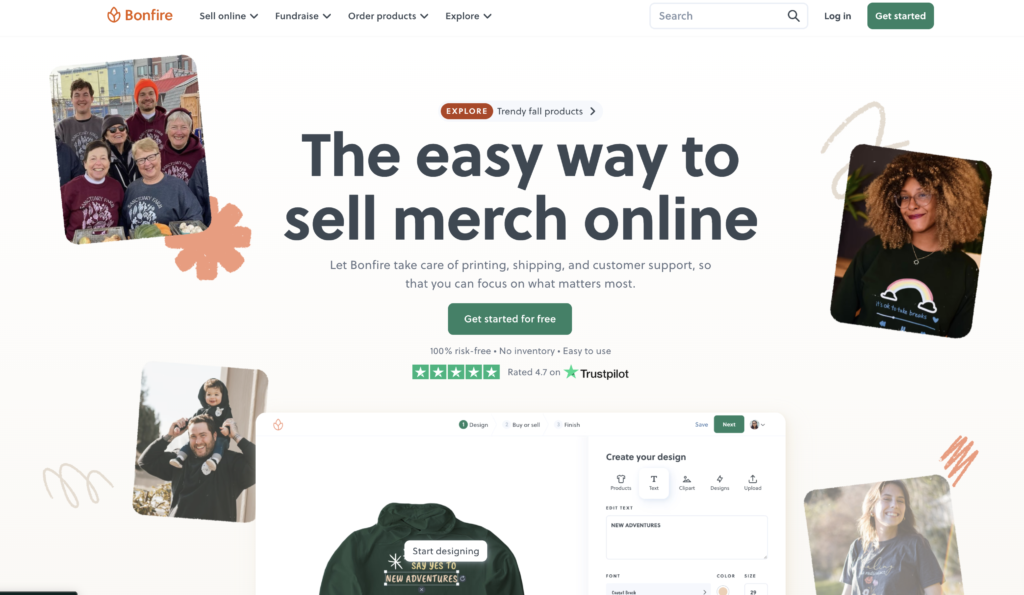
Platforms such as Bonfire and Spreadshirt let you run campaign-based pre-orders or open-ended storefronts with no inventory to hold. Bonfire is particularly popular for short campaign drops, and Spreadshirt integrates directly into YouTube merch shelves.
With Bonfire, you can set up a campaign for a set length of time, put the link out on stream, and Bonfire will print and ship the order batch to the buyers when the campaign has finished. You can use their T-shirt calculator to figure out your profit margins before you order, which is a neat detail. A fan favorite is their Premium Cotton T-shirt – $17.98 each for an order of 50 with a 1-color print. It’s a best-seller, 100% cotton shirt with a great finish for printing, and it’s the standard for channel drops.
With Spreadshirt, you get a volume discount starting at 5 items per order regardless of order value. For some products, the discount kicks in from as low as 3 items per order (this includes baby products, pillowcases and underwear).
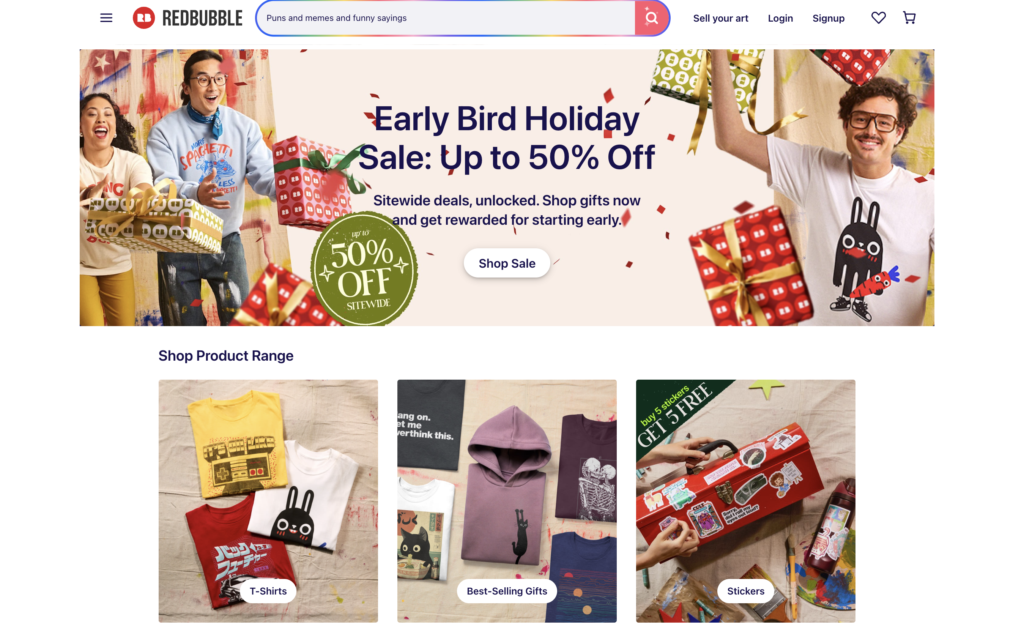
Marketplace platforms like Redbubble can also be good if you’re looking to take the weight of fulfilment off your shoulders and focus solely on streaming. Redbubble in particular comes with its own organic search traffic, exposing your designs, and therefore your content, to existing site visitors. The catch is that the margins per item are generally quite low, and you have limited control over customer data and branding.
If you picked screen printers…
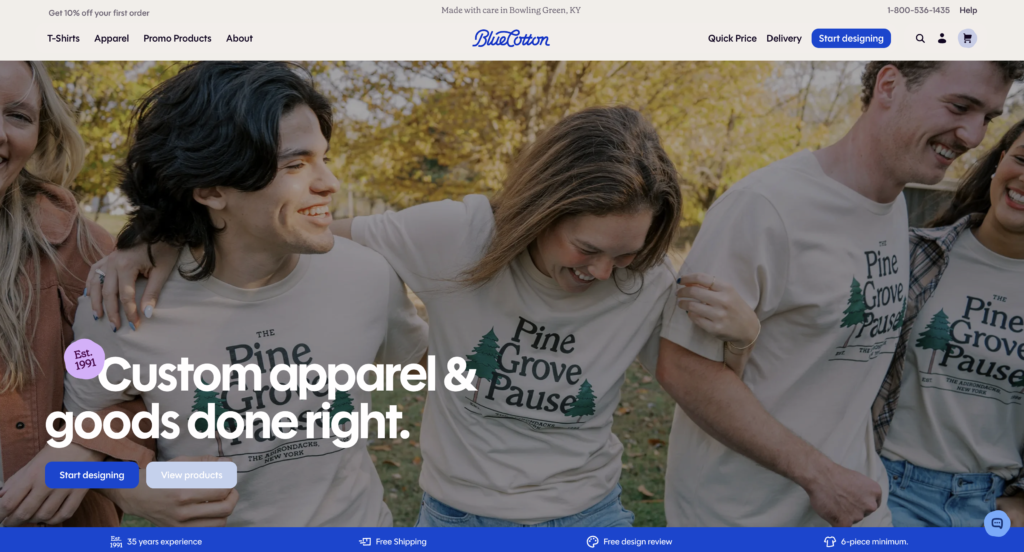
For those looking to order small batches first before going bigger, BlueCotton is a custom apparel printer that does 100% of its screen printing and embroidery in-house. For streamers moving into the small batch space, they have very low minimum order quantities (starting at just 6), with standard volume pricing from around 50 pieces onwards. Every order includes a free artwork review from professional artists, guaranteed delivery dates, and direct access to in-house customer support.
The Gildan Heavy Cotton T-Shirt comes in at roughly $6.12 per shirt for an order of 50 shirts with a 1-color front print. It is a durable, classic-fit tee that’s an ideal entry point for a budget-friendly drop.
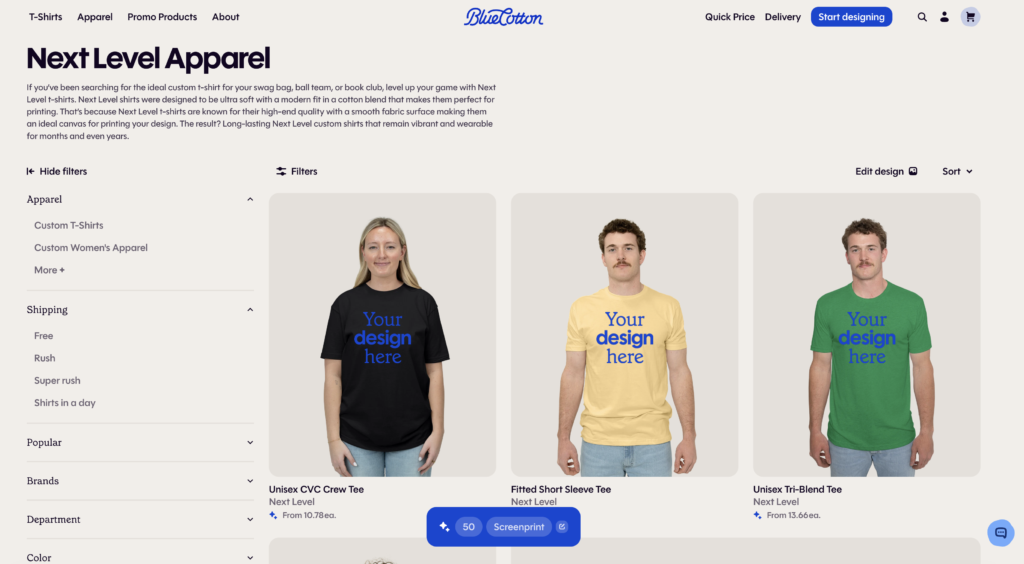
The Next Level Apparel Cotton T-Shirt comes in at roughly $8.10 per shirt for an order of 50 with a 1-color front print. It provides a lightweight, premium blank suited for streetwear-style drops.
RushOrderTees is another fairly well-known screen printer, recognized for incredibly fast turnaround times. Their base pricing on small runs is a bit higher than BlueCotton’s on standard lead times, but their no-minimum spend and 24-hour and 3-day rush options make them a strong choice if you need physical merch quickly for a convention or live event.
Their Classic Tee is $10.41 each for 50 items with a 1-color front print, made from 100% cotton, and always in stock.
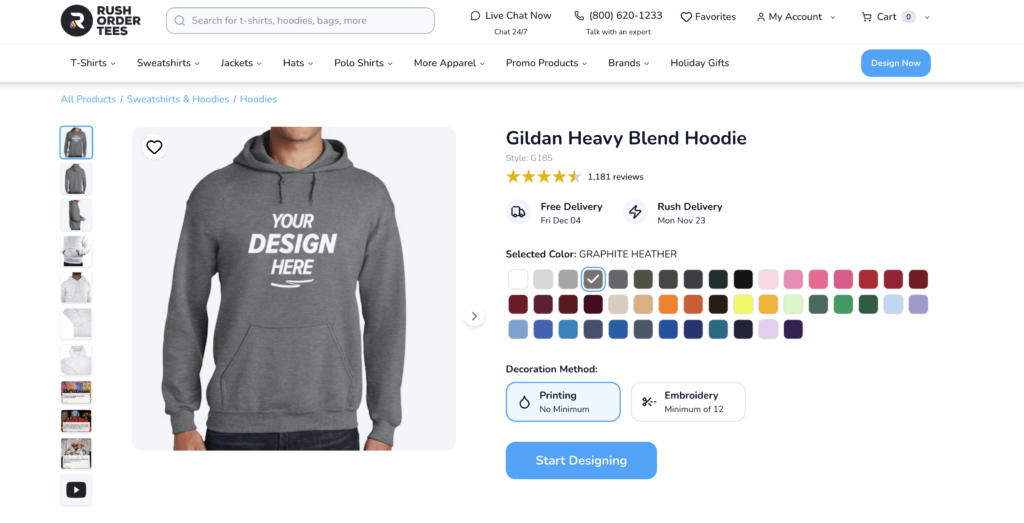
They have a whole host of products, but one of their most popular is the Gildan Heavy Blend Hoodie. 50 of these will cost $27.63 per unit, a 39% bulk discount.
If you want to go all-in…
For large-scale creators with thousands of concurrent viewers, a full-service agency will handle everything from custom cut-and-sew manufacturing to global warehousing and customer support.
Warren James offers high-touch management services for very large digital creators. Their services include custom apparel manufacturing, custom packaging, bespoke accessories, and complex international logistics. You can even get plushies!
Custom Ink Enterprise is another great option – from professional polos and rugged workwear to premium water bottles, tech accessories, and notebooks, there’s something for everyone. Their bestseller, the Gildan Softstyle Jersey T-shirt, is $9.65 for 50, if shipping to California with a simple one-sided design.
The bottom line for your streaming merch
A genuinely sustainable business in the long term won’t rely on print-on-demand alone. If you want to test the merch waters out, check out places like Bonfire and Spreadshirt for print-on-demand, or try BlueCotton for screen printing. Once you scale your merch business, you might want to check out Warren James or Custom Ink Enterprise.