

- Lucchese Alternatives: The Cowboy Boot Brands I’d Actually Consider - August 28, 2026
- Best Western Jeans for Men: The Pairs That Actually Work with Cowboy Boots - August 24, 2026
- Tecovas vs Tony Lama: Which Cowboy Boots Should You Buy First? - July 24, 2026
I understand why people end up looking at Lucchese. I’ve owned a pair, and they have the kind of shape, leather, and finishing that makes you stop for a second when you pull them out of the closet. The problem is that I also spent most of that time preserving them a little, whether I meant to or not.
When boots cost enough, you start noticing gravel that has been sitting in the same driveway for fifteen years. Lucchese’s current men’s lineup includes boots around $645 and $895, with plenty of exotic styles moving past $1,000. The Luke is currently $895, the Sunset Roper is $645, and the Rio is $1,295. Those prices may be completely reasonable for someone buying the name, construction, leather, and history together, but plenty of people just want a really good cowboy boot without turning every scuff into a small financial event.
For most shoppers looking for a Lucchese alternative, I’d see if Tecovas has the style you’re after. If so, you can still get traditional Western construction at a lower price point. I’d look harder at Tony Lama or Rios of Mercedes when heritage and unusual leathers are the bigger draw. Chisos makes more sense for someone who still wants a substantial, expensive-feeling boot and is willing to spend close to Lucchese territory. Ariat belongs in the conversation when comfort, traction, and hard daily use are driving the purchase. The useful question is what you liked about Lucchese in the first place.
At a Glance: My Favorite Lucchese Alternatives
| Brand | Best for | My take |
| Tecovas | Best overall Lucchese alternative | Traditional construction, very good early comfort, cleaner styling, and a price that makes me less nervous about actually wearing the boots. |
| Tony Lama | Best for variety and exotics | A huge range of leathers, toes, soles, and price points. Better for someone who already knows exactly what he wants and enjoys digging through the options. |
| Rios of Mercedes | Best for Texas-made heritage | The one I’d research if old-school bootmaking and domestic craftsmanship are what attracted me to Lucchese in the first place. |
| Chisos | Best premium alternative | A substantial, traditional build with a comfort-focused approach. It costs more, but there’s a lot going on inside the boot for the money. |
| Ariat | Best for work and rougher ground | The practical choice when traction, weather, concrete, or long workdays matter more than having the dressiest boot in the room. |
Why I’d Start with Tecovas
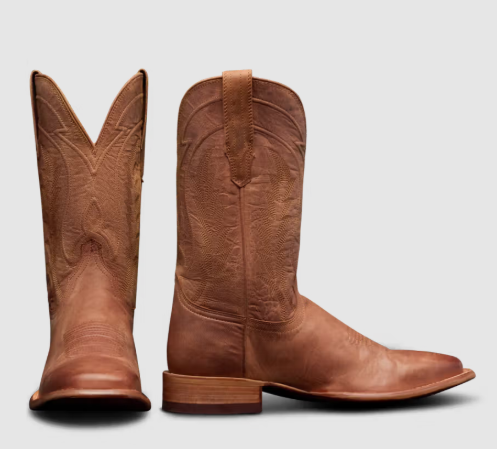
I own Tecovas The Doc in goat leather, and it’s the easiest recommendation for me because I know what it feels like outside of a product page. The first thing I noticed when I opened the box was the leather smell. The goat leather felt soft as soon as I picked the boots up, and when I put them on, I didn’t have that immediate little argument with myself about whether the pressure on my toes would somehow become character-building after a few weeks, aka they fit.
The broad square toe gave me enough room up front, the boot held securely through the instep, and the leather started moving with my foot almost immediately. I’ve ordered other cowboy boots where I knew within thirty seconds that they were headed back. The shaft was too tight around my calf, the heel felt sloppy, or my toes were already filing a complaint before I had walked across the room.
The Doc was the opposite experience. It currently costs $375 and uses a broad square toe, hung leather lining, a tri-layer insole, a stacked leather heel with a rubber cap, a leather outsole, and three-quarter Goodyear welt construction. Those details sound nice on a specification sheet, but the practical result is a boot that feels finished inside, holds its shape, and still softens quickly because of the goat leather.
I wear mine with jeans around the property on dry days, in town, to dinner with my wife, and in professional settings where Western boots look completely normal. I work in Utah and spend time in Texas, where cowboy boots are part of the culture and what they say about you matters.
The leather sole does require some judgment. I’m comfortable wearing it across gravel, dry grass, parking lots, and normal daily mess. I’m grabbing something else for mud, ice, or a wet day around the animals. The rubber heel cap helps with traction, but it doesn’t magically turn a dressier leather-soled boot into a chore boot. My goats have stepped on them several times anyway; they don’t recognize premium footwear as a protected category!
Tecovas also gives you an easy-to-understand entry path into the category. Alongside the broad, square-toe Doc, they have The Cartwright: a classic round-toe cowboy boot which currently starts around $375. There’s also The Earl, a lower-heeled roper at about $325. You can compare three genuinely different shapes without opening seventeen browser tabs and forgetting why you started.
My Lucchese boots felt special. My Tecovas feel easy to wear; I end up getting more use out of easy.
Tony Lama Gives You More Places to Look
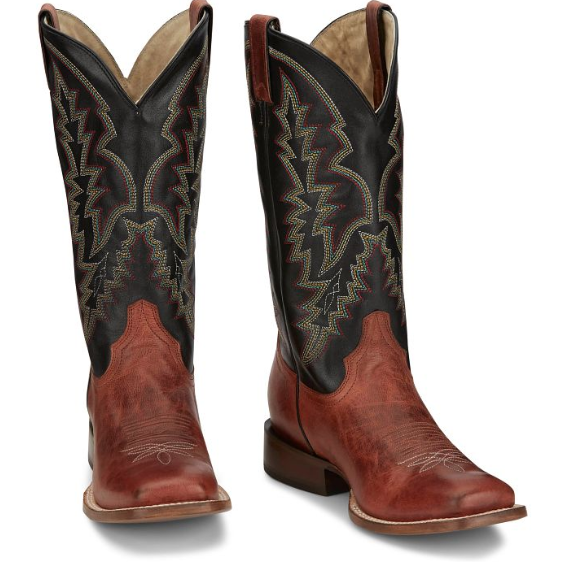
I’ve owned Tony Lama boots before too, and I consider them legitimate, good-quality Western boots. I still prefer my Tecovas, although that has more to do with the exact pairs I owned and how they fit me than some sweeping judgment against Tony Lama.
Tony Lama makes more sense if you enjoy the search. Its current men’s cowboy boot catalog includes 72 models, with round, square, and pointed toes; leather and combination soles; cowhide, goat, ostrich, caiman, alligator, and other materials; and dozens of boots labeled as made in the USA with global parts. Prices stretch from the $200 range through exotic models approaching $2,000.
That range can save you money. The Camarillo is regularly priced at $285 with three-quarter welt construction and Cushion Comfort. The Blaine ostrich is $330, while the Carlos full-quill ostrich is $610 and made in the USA with global parts. Someone who wants a particular hide, toe, heel, sole, and origin may find a combination here that Lucchese offers at a much higher price.
You do have to pay attention because “Tony Lama” describes a very broad catalog rather than one consistent construction level. A $200 work-oriented boot and a $600 El Paso exotic are sharing a last name, but they aren’t the same purchase. I’d point an experienced buyer toward Tony Lama when he already knows what he likes and doesn’t mind comparing individual models. A newer buyer may find a more curated range easier because the choices narrow themselves down faster.
Rios of Mercedes Is the Heritage-Purist Answer
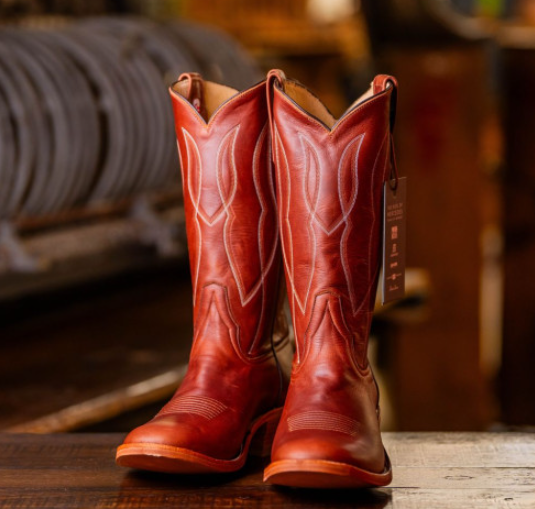
Rios of Mercedes is the brand I’d research when the appeal of Lucchese is the history and traditional Texas bootmaking rather than the Lucchese name itself. The company traces its history to 1853, and its stock collection still includes boots handmade in Mercedes, Texas. One current example, the R9014, uses full-quill ostrich, a full leather lining, removable footbed, double-welt sole stitching, a heavy leather sole, and a stacked leather roper heel.
Rios works more like an old-school boot brand. The company directs buyers to retailers rather than presenting a simple direct-to-consumer price list, so you may have to call around, check available stock, and work with a store that understands the fit. That retailer-based shopping model is either charming or mildly inconvenient depending on how urgently you need boots.
I haven’t owned Rios of Mercedes, so I wouldn’t pretend to compare the break-in or fit from firsthand experience. On construction and heritage, though, it deserves a place on the list for someone who was attracted to Lucchese because of domestic craftsmanship and the feeling of buying from a long-standing Texas bootmaker.
This probably isn’t where I’d send a nervous first-time buyer. It’s where I’d send the person who knows his size, understands what a Milan toe is, and gets a little too happy when a retailer starts discussing sole weight.
Chisos Costs More, But You Can See Where the Money Goes
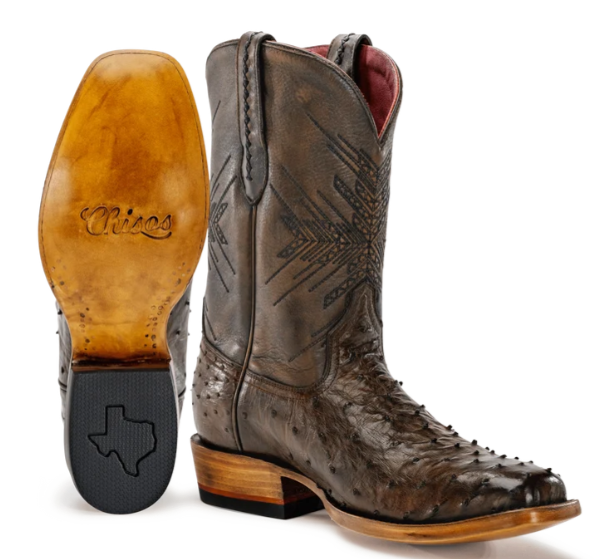
Chisos isn’t the bargain choice here. The No. 2 square-toe boot is currently $595, which puts it much closer to the lower end of Lucchese pricing than to Tecovas or Ariat. The construction is serious: Chisos lists Goodyear construction, a leather channel welt, leather lining, stacked leather heel, veg-tanned leather heel counter, leather sole, leather insole, steel shank, and a removable comfort insole. The boot is fully rebuildable and resoleable and handcrafted in Guanajuato, Mexico.
I haven’t worn the No. 2 long enough to give you a personal six-month report, so this is based on its published build rather than me wandering around the ranch in a borrowed pair. What I can say is that Chisos appears to spend money inside the boot, not only on the visible leather. The removable insole gives it a more comfort-heavy approach than a strictly traditional leather footbed, and the rest of the construction stays old-school enough for someone who wants a boot that can eventually be rebuilt.
I’d consider Chisos when Tecovas feels a little too streamlined, and Lucchese feels too expensive or too precious. At $595, it still costs enough that I’d want to be very sure about the fit before scuffing the sole. This is a commitment, just one that stops short of some of Lucchese’s current four-figure prices.
Ariat Makes More Sense When the Ground Gets a Vote
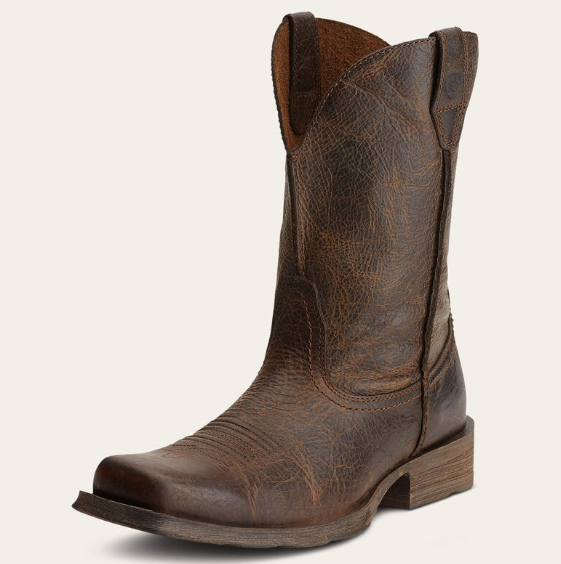
Ariat is the least Lucchese-like recommendation here. Someone walking concrete all day, dealing with wet ground, or working around livestock may care less about a hand-finished leather sole once the parking lot turns into slush. I’ve had Ariats, and my experience was that they leaned more practical than handsome. Depending on the day, practical can win by a landslide.
The Rambler currently costs $189.95. It has a square toe, full-grain leather upper, Ariat’s ATS support system, and a flexible Duratread outsole designed for stability on uneven ground. It comes with a distressed, broken-in appearance rather than the cleaner finish you’d expect from Lucchese or Tecovas.
I wouldn’t buy the Rambler hoping it would look or feel like a Lucchese. I’d buy it because I expected to stand, walk, work, and encounter weather without staring sadly at the sole afterward. That may sound like a different assignment, but shoppers often begin by wanting “a nice cowboy boot” and slowly realize they need something they can wear on a jobsite. Ariat is usually where the practical side of the decision starts talking louder.
Which Lucchese Alternative Would I Buy?
I’d spend my own money on Tecovas first. The Doc gives me the square-toe shape I prefer, the goat leather feels good immediately, and I can wear the boot through more parts of my actual week. The current $375 price is well below most of the Lucchese men’s styles I was comparing, while the leather lining, welted construction, stacked heel, and leather sole still feel like cowboy-boot construction rather than a Western-looking fashion shoe.
Tony Lama would get more of my attention if I wanted a specific exotic or a model that specified ‘made in the USA with global parts.’ I’d research Rios of Mercedes for a Texas-made heritage pair, although I’d want to try them through a knowledgeable retailer. Chisos is the brand I’d consider if I was wanting to spend more for a heavy traditional build and comfort insole. Ariat is the pair I’d use when the weather and ground conditions were more important than dressier finishing.
I absolutely understand buying Lucchese. Sometimes you want the Lucchese, and every alternative is just a boot you looked at before buying the Lucchese. For most everyone else, I’d try some other options before assuming you need to spend $700, $900, or more to get a serious pair.